
Reviewed · METEORA MONASTERY TOURS
Meteora: Panoramic Morning Small Group Tour with Local Guide
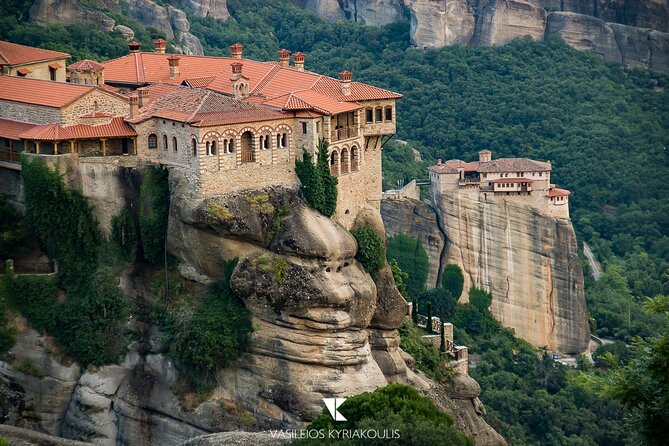
Meteora is Greece at its most improbable: huge rock pillars rise from the Thessalian plain, with centuries-old monasteries perched on top. This four-hour morning outing gives you the broad view first, then takes you inside three monasteries, a useful mix when you have only one day in Kalabaka or Kastraki.
I like the small air-conditioned minibus, which makes the steep roads and short transfers easy, and I like the number of photo stops. Local guides such as Yannis, Christos, Giannis, and Vavos have been praised for clear explanations, humor, and local insight. The main consideration is physical: expect steps, uphill walking, and time on your feet. You also pay €5 in cash for each monastery.
- All six monasteries from the road: You get photo stops and explanations for every active monastery, not just the three you enter.
- Three interior visits: Great Meteoron, Varlaam, and Rousanou are the usual core stops, though opening schedules can affect the plan.
- Morning timing: Starting early helps you avoid some of the heavier crowds and stronger midday heat.
- Local pickup: Hotel and Airbnb pickup is available in Kalabaka and Kastraki, followed by short minibus rides.
- Free multilingual audio guide: Use your own smartphone and earpads inside the monasteries.
- Good value at $35: The price covers transport, the live guide, stops, and planning, but not the entrance fees.
Why this four-hour Meteora tour works
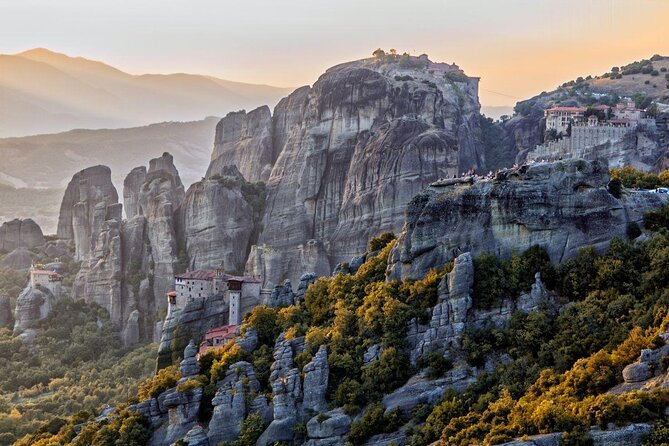
Meteora can be awkward to visit without a car. The monasteries are spread across a group of towering rock formations, and the best viewpoints are not always beside the monastery entrances. This tour handles the driving, the route, and the timing while giving you a local guide to explain what you are seeing.
The four-hour length is a strength. You get a clear introduction to the area without giving up the entire day. Afterward, you can have lunch in Kalabaka or Kastraki, rest, or return independently to a place you especially liked.
The tour begins with pickup in Kalabaka or Kastraki. The vehicle transfer to Meteora takes only about five minutes, so most of your time is spent among the rocks rather than on the road. Transport is by small, air-conditioned minibus, with WiFi available.
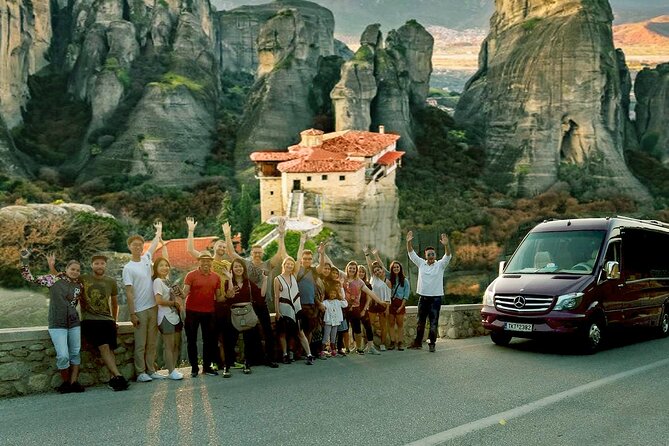
Group size can vary, but several outings have had fewer than 20 people, and some have been much smaller. That matters at photo stops, where a compact group moves more easily than a large coach party. Private groups are also available if you want more control over the pace.
The first view: six monasteries from one remarkable setting
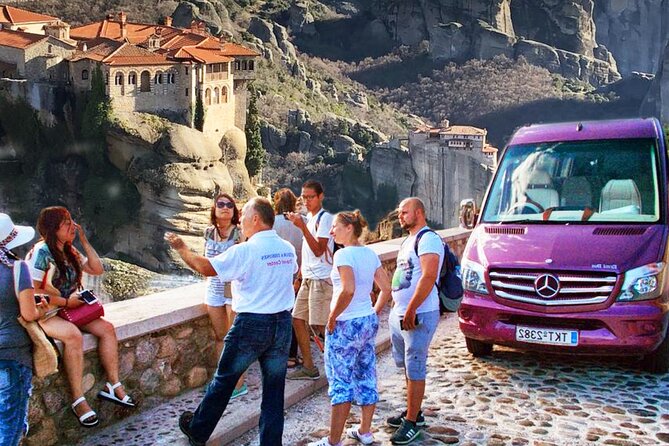
The first part of the outing is about seeing Meteora as a whole. The rocks rise sharply from the plain, and the monasteries appear in different positions above you, on ledges and summits that once required difficult access.
Your guide provides the broad story of the monastic community, the Byzantine roots of the site, and the unusual geology of the rocks. The best guides also connect the buildings to local life rather than treating them as empty photo backdrops. Guides named Yannis, Christos, Giannis, Nicolas, John, Nancy, and Vavos have all been praised for clear explanations and a friendly manner.
You will stop at viewpoints along the road for photographs. These stops are important because you cannot get a complete sense of Meteora from inside one monastery. The road gives you wider views of all six active monasteries, including the three you do not enter that day.
The guide may also point out the hermit caves and other less obvious places in the rocks. These details help explain how earlier religious communities used the cliffs before the larger monasteries became the main centers.
Other monastery and cliff-top days from Kalabaka:
- Meteora: Morning Half Day Sightseeing and Monasteries Tour
★ 4.7 · 478 reviews - Meteora: Majestic Sunset Tour & Monasteries with Local Guide
★ 4.7 · 359 reviews - Athens: Guided Tour to Meteora Monasteries & Hermit Caves
★ 4.7 · 211 reviews
St. Nicholas Anapavsa and the lower rock monasteries
The Monastery of St. Nicholas Anapavsa is included as a photo and sightseeing stop in the standard route. Its position among the lower rock formations gives you a useful sense of how closely the buildings fit the terrain.
You may not enter this monastery on the standard morning plan, since the three interior visits are generally Great Meteoron, Varlaam, and Rousanou. That is not necessarily a weakness. Trying to enter every monastery would make the morning rushed, and each visit involves its own stairs, queues, and time inside.
Use this stop to take in the setting and listen to the explanation. Meteora is not simply a row of churches on tall rocks. The location, access routes, and changing views are part of what makes the site special.
Great Meteoron: the largest monastery visit
Great Meteoron, also called the Monastery of the Transfiguration, usually receives about an hour in the itinerary. It is the largest and best-known of the Meteora monasteries, so this is where you will likely spend the most time.
Inside, you can see religious objects and historic features while following the free audio guide on your smartphone. The live guide normally explains the site before or around the visit rather than accompanying you through every interior room. That arrangement gives you more freedom to move at your own pace, but you need to pay attention to the meeting time.
The walk can be demanding. You should be comfortable with stairs and uneven sections, and you should allow extra effort in warm weather. One useful feature of the tour is that the driver drops the group near the monastery entrances, so you do not have to walk long distances from a distant parking area.
Dress carefully. The monasteries require modest clothing. Women need a knee-length or longer skirt and cannot wear trousers, shorts, or sleeveless shirts. Men cannot wear shorts or sleeveless clothing. It is best to arrive already dressed appropriately rather than rely on finding a cover-up.
Varlaam: a second look at monastic life
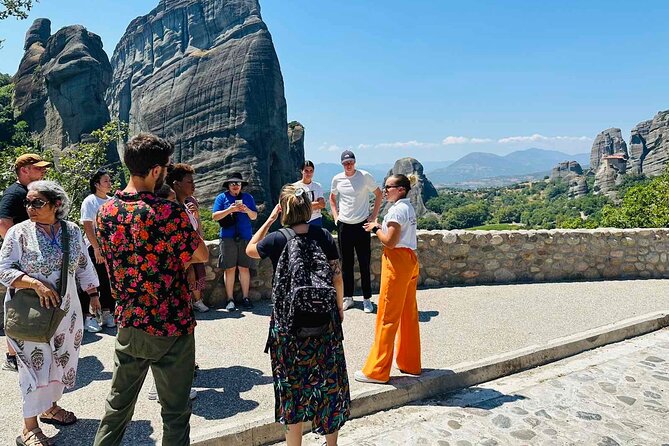
The Monastery of Varlaam receives about 45 minutes. It is another major stop, with a different position and feel from Great Meteoron. Seeing both helps you compare the buildings, courtyards, chapels, and views rather than assuming every monastery is the same.
The guide’s historical context is especially useful here. Without explanation, you might spend your time taking photographs and miss how isolated these communities once were. With the audio guide inside, you can focus on details at your own speed while still having a structured account of what you are seeing.
Forty-five minutes is enough for a focused visit, but it is not an open-ended exploration. Keep an eye on the time, especially if you stop often for photographs. Families can manage the route, but children need to be comfortable with stairs and walking. One family with children aged seven and ten completed the morning successfully, though the physical effort should not be underestimated.
A few more things to do in Kalabaka worth a look
- Kalabaka: Meteora Private Day Tour with a Local Guide
★ 4.8 · 26 reviews - Athens: Acropolis Ticket with Optional Audio or Live Guide
★ 4.2 · 11,055 reviews - Athens: Acropolis, Parthenon & Acropolis Museum Guided Tour
★ 4.8 · 9,316 reviews - Athens: Acropolis and Parthenon Guided Walking Tour
★ 4.6 · 5,882 reviews
Rousanou and the views from the road
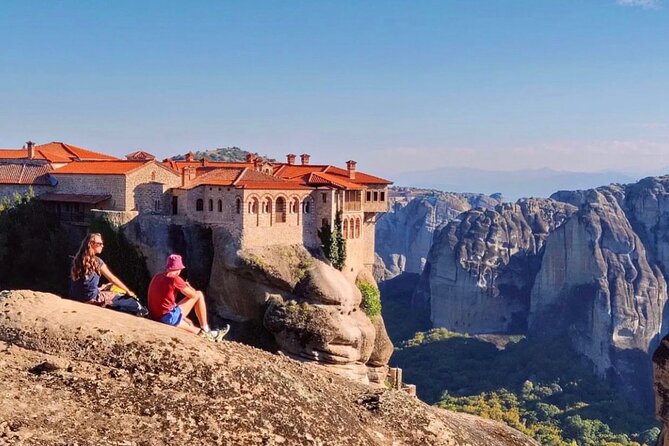
The Monastery of Rousanou is scheduled for about 30 minutes inside. Its position provides another strong viewpoint across the rock formations, and the shorter visit adds variety without stretching the tour too far.
The remaining stops are mainly photo points. You will see Holy Trinity and St. Stephen from the road, with roughly ten minutes at each stop. These brief pauses are enough for photographs and a guide’s explanation, but not for a full interior visit.
This division of time is sensible. Three monastery interiors give you substance, while the road stops give you the full six-monastery picture. If your priority is entering every building, this is not the right format. If you want a well-organized introduction with a good range of views, it works better.
The exact monasteries open to the public can change by day. Each monastery has its own closing schedule, so the three interior visits may be adjusted. Your guide can explain the day’s route, but you should not book this expecting an identical order on every departure.
What the guide adds, and what the audio guide does not
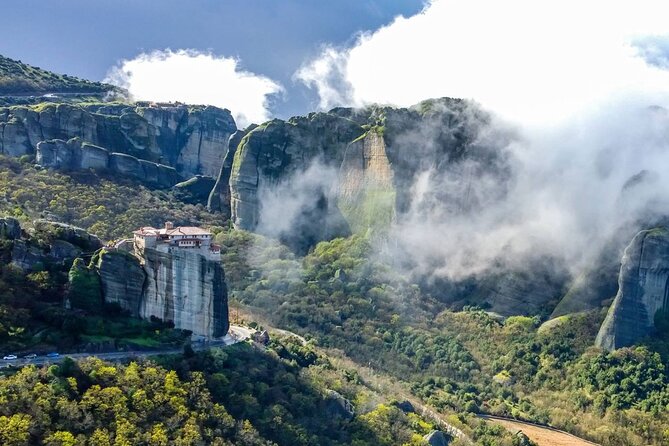
The live guide speaks English and remains with the group between stops. This is where the tour gets much of its value. A local guide can point out viewpoints, explain the area in plain language, answer questions, and help you understand why the monasteries were built in such difficult places.
Some guides speak quickly, especially when fitting a lot into four hours. If you find the pace fast, ask for a repeat or clarification. English ability can vary by guide, although several guides have been praised for clear, well-organized commentary.
The guide generally does not enter the monasteries with you. That can be a benefit if you prefer to wander independently, but it also means the audio guide matters. It is available in English, Spanish, French, Italian, German, Dutch, Portuguese, Polish, Russian, Japanese, Korean, and Chinese.
Bring a smartphone and your own earpads. The audio guide covers the monasteries and 11 points of interest. Download or prepare your phone before leaving your accommodation, and make sure it has enough battery for the morning.
Price, entrance fees, and what you receive
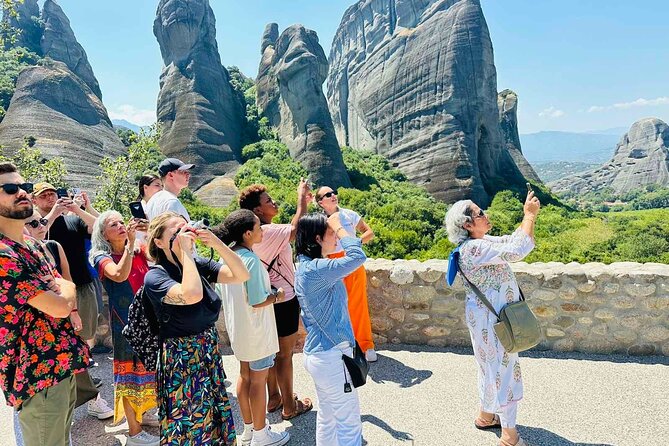
At $35 per person, this is a strong value for a half-day outing. The cost includes pickup and drop-off in Kalabaka or Kastraki, air-conditioned minibus transport, a live English-speaking guide, the multilingual audio guide, WiFi, a panoramic map, photo stops, and entry to the route around all six monasteries.
The extra cost is the monastery admission. The stated fee is €5 per monastery, payable in cash, so budget €15 per person for three interior visits. Bring small notes or coins, since cards are not accepted for this charge.
Meals and drinks are not included. Four hours is short enough that most people can eat before or after the tour, but bring water, especially in warm weather. Some private outings have included water, but it is not part of the standard inclusions.
Flexible cancellation up to 24 hours before departure and reserve-now, pay-later booking can help if your Greece itinerary is still moving around. Pickup is offered from hotels and Airbnb addresses in Kalabaka and Kastraki. Trikala appears among the listed pickup and drop-off choices, but the detailed pickup information specifically focuses on Kalabaka and Kastraki, so confirm the exact location before booking.
When to go and who should choose it
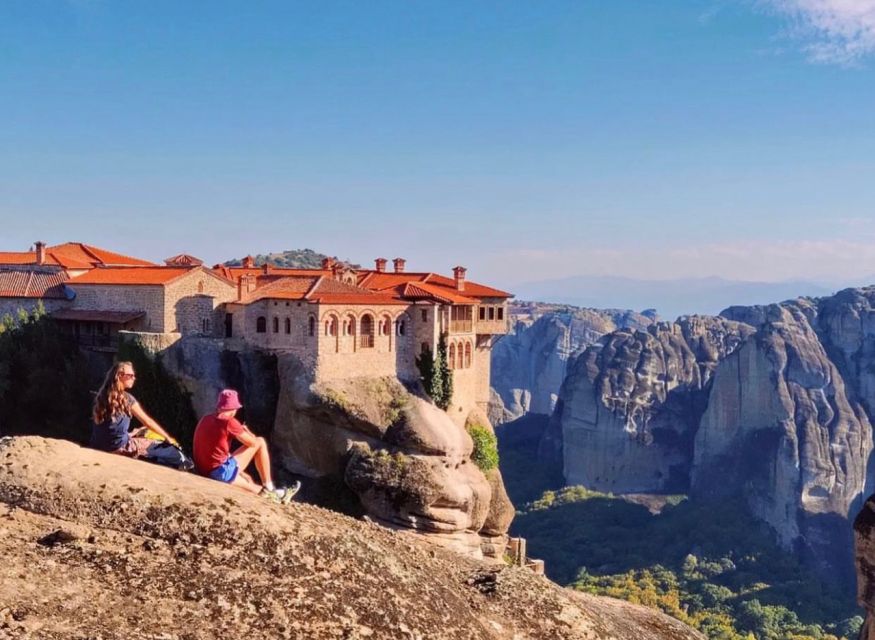
I would choose the morning departure. Meteora can become crowded later in the day, and early starts usually give you cooler temperatures and a calmer first look at the rocks. The morning route also leaves your afternoon free for a meal, a walk, or another visit.
This tour suits you if you:
- Have only one day in the Kalabaka area
- Prefer not to drive steep and unfamiliar roads
- Want context instead of only photographs
- Like a compact group and a clear schedule
- Want to enter three monasteries and see all six
- Are comfortable with stairs and moderate walking
It is less suitable if you want a slow spiritual visit, extensive hiking, or long periods inside each monastery. You may prefer an independent visit if you have a car and several days. You may also want a private group if your departure time, walking pace, or monastery choices need to be customized.
One private outing was shortened by an hour to fit another onward journey, showing that the operator can sometimes adapt. Do not count on every group departure being flexible, but private arrangements offer more room for changes.
Practical tips for a smoother morning
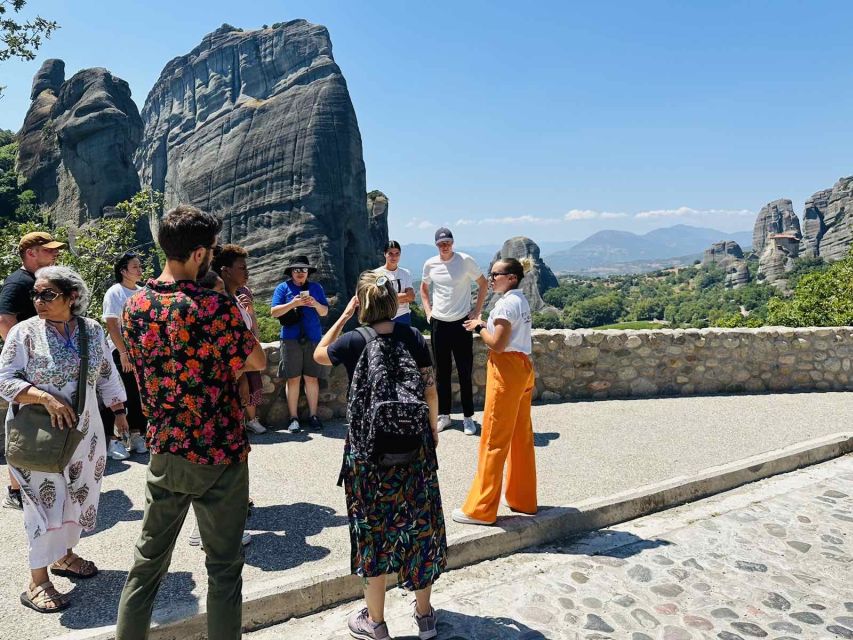
Wear shoes with a firm sole. The tour includes short walks, steps, and uphill sections, and the climb to some monasteries can feel harder than the schedule suggests.
Carry cash for the three entrance fees. Bring water, your smartphone, earpads, sunglasses, and clothing that meets the monastery rules from the start.
Keep your camera ready during road stops. The best wide views may last only a few minutes, and the driver or guide will need to keep the group moving.
Listen for the meeting time at each monastery. The interior visits are self-guided, so it is easy to lose track while looking at chapels, artifacts, and viewpoints.
If you are traveling with children, explain that this is an active sightseeing morning, not a bus ride with occasional steps. Children who can handle walking and stairs should manage well, but the schedule does not leave unlimited time for breaks.
Should you book this Meteora tour?
I would book it if you want the most efficient first visit to Meteora. The combination of six-monastery views, three interior visits, local commentary, and hotel pickup gives you a lot in four hours, especially for $35 plus admission fees.
Choose it with realistic expectations. You will not receive a private guide inside every monastery, and you will need to walk, climb, dress modestly, and keep to the schedule. But if you want a practical introduction, strong viewpoints, and enough history to understand what you are seeing, this morning tour is a sensible choice.
FAQ
Where does the Meteora tour pick up?
Pickup is available from hotels and Airbnb accommodations in Kalabaka and Kastraki. Trikala is also listed among the pickup and drop-off options, so confirm the exact location when booking.
How long does the tour last?
The tour lasts four hours, including transport, guided sightseeing, photo stops, and visits to three monasteries.
How many monasteries will I visit inside?
You will normally enter three monasteries and see all six active monasteries from viewpoints along the road. The specific monasteries open for interior visits can change according to their closing schedules.
Are monastery entrance fees included?
No. Entrance costs €5 per person for each monastery and must be paid in cash. For three monastery visits, budget €15 per person.
Does the live guide enter the monasteries?
The live English-speaking guide provides information during the route, but does not normally accompany you inside the monasteries. A free smart audio guide is available for use inside.
What languages are available for the audio guide?
The audio guide is available in English, Spanish, French, Italian, German, Dutch, Portuguese, Polish, Russian, Japanese, Korean, and Chinese.
What should I wear?
Everyone must dress modestly. Women need a knee-length or longer skirt and cannot wear trousers, shorts, or sleeveless shirts. Men cannot wear shorts or sleeveless clothing.
Just added in Kalabaka
- Meteora Sunset Tour on E-bikes★ 5.0 · 54 reviews
- Meteora Electric Bike Tour★ 5.0 · 61 reviews
- From Kalabaka/Kastraki: Meteora Monasteries Morning Tour★ 4.8 · 178 reviews
- Meteora Evening Tour with Breathtaking Sunset View★ 5.0 · 44 reviews
- Meteora: Sunset Small Size Tour with Monastery & Caves visit★ 4.9 · 171 reviews
- Meteora: Monasteries Tour, Lunch, and Athens Transfer Option★ 4.8 · 102 reviews
- Kalabaka: Meteora Monasteries Minibus Tour with Photo Stops★ 5.0 · 74 reviews
- Meteora: Sunset Hike to Secret Caves★ 4.9 · 56 reviews
Meteora Monastery Tours, compared.
Meteora Monasteries Day Trip with Caves and Lunch
Read our review →

Meteora Tour with Local Guide and Greek Lunch
Read our review →
Meteora Monasteries, Caves & Coastal Stopovers with Lunch
Read our review →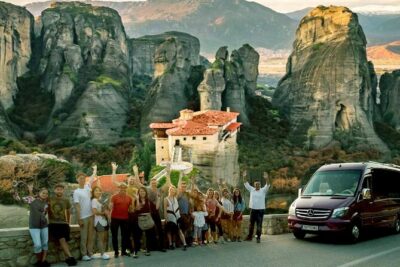
Meteora Monasteries & Caves DayTrip from Athens with Greek Lunch
Read our review →
4-Day Classical Greece Tour: Epidaurus, Mycenae, Olympia, Delphi, Meteora
Read our review →Browse the lists this tour appears in