
Reviewed · ANCIENT OLYMPIA TOURS
Ancient Olympia: Archaeological Site and Museum Entry Ticket
Ancient Olympia is where sport, religion, and politics met in the ancient Greek world. With this ticket, you can walk through the old sanctuary, stand in the stadium where the Olympic Games took place, and see the Hermes of Praxiteles in the Archaeological Museum. The sense of place is the main event.
I like the freedom to explore without a live guide or fixed group, and I like having entry to three separate attractions on the same date. The main drawback is that the ticket is non-refundable, and only the Archaeological Museum has a fixed entry time. The audio tour can also feel awkward because its stops are not arranged in a clear walking order.
Key points at a glance
- Walk through the birthplace of the Olympic Games: See the ancient stadium, training spaces, temples, and sacred precinct of Zeus.
- Visit three attractions: Your ticket covers the archaeological site, Archaeological Museum, and Museum of the History of the Olympic Games.
- Book the museum time carefully: The Archaeological Museum requires entry at the selected time, with access allowed from 15 minutes before to 15 minutes after.
- Explore without a live guide: The experience is self-guided, with an English audio tour included for the Olympic Games Museum and available for the archaeological site with the right option.
- Plan for heat and sun: Much of the site is outdoors, so water, sun protection, and a slow pace matter in summer.
- Know what the ticket does not include: There are no hotel transfers, no live guide, and no physical audio device or earphones.
Why Ancient Olympia still feels powerful
Ancient Olympia was not simply an athletics venue. It was a major sanctuary dedicated to Zeus, filled with temples, offerings, training areas, and monuments honoring athletes and powerful city-states.
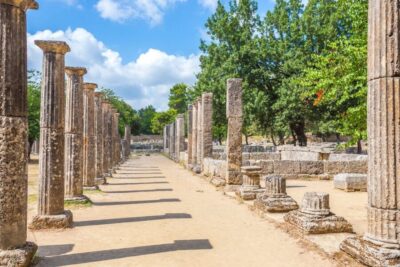
That mix gives the site its appeal. You are not walking through a single preserved building. You are moving among foundations, columns, fallen stones, sacred spaces, and open ground that once formed one of the most important religious centers in Greece.
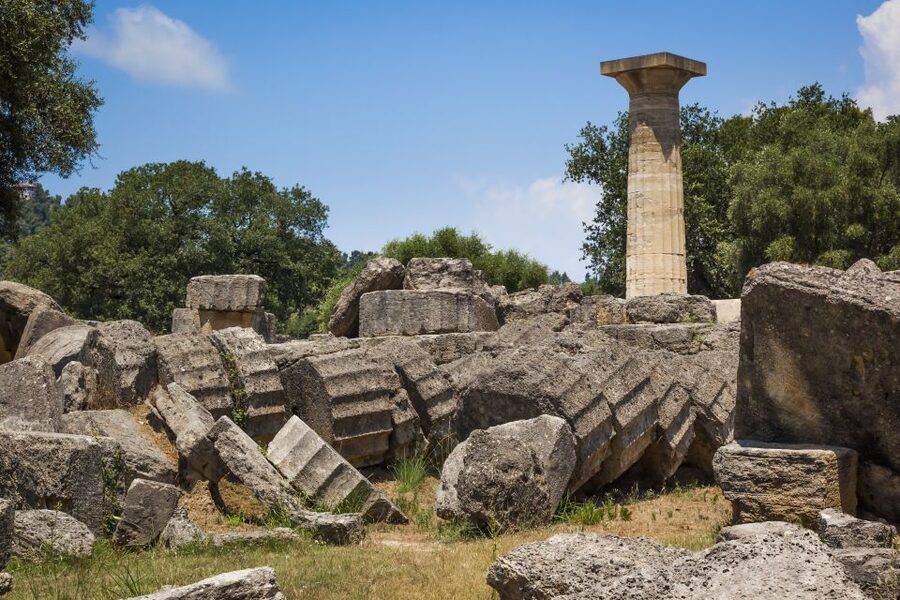
The Olympic Games began here in antiquity and were held in honor of Zeus. The ruins do not recreate the ancient buildings for you, so a little imagination helps. The Temple of Zeus is now mostly a field of massive stones and broken columns, but its size still gives you a sense of the building’s importance.
I find this kind of site rewarding because it asks you to look closely. The remains can seem scattered at first, but the layout begins to make sense as you move from the temples to the training areas and finally toward the stadium.
Other classical sites from Greece:
- 4-Day Classical Greece Tour: Epidaurus, Mycenae, Olympia, Delphi, Meteora
★ 4.5 · 732 reviews - Olympia: Tour with Virtual Reality and Audio
★ 4.8 · 505 reviews - Katakolo Port: Transfer to Ancient Olympia and VR Audio Tour
★ 4.1 · 403 reviews
Starting at the Temple of Zeus
The Temple of Zeus is the heavyweight of the archaeological site. It was the largest temple in the Peloponnese and is often regarded as a fine example of Doric architecture.
Today, you see ruins rather than a complete temple, but the scale is still striking. Look at the fallen drums of the columns and the broad footprint of the building. These pieces help you understand how high and imposing the original structure must have been.
The temple was central to the sanctuary of Zeus, and its remains give the site a clear center. If you are interested in ancient architecture, spend time here rather than rushing straight to the stadium. The stones are not just background scenery. They show how Greek builders worked with enormous blocks and strict proportions.
The site has limited explanatory material in places. You may want to read the audio information carefully and use the map to connect the ruins with their original purpose. The self-guided format gives you time, but it also means you must create your own order.
The Temple of Hera and the sacred Altis
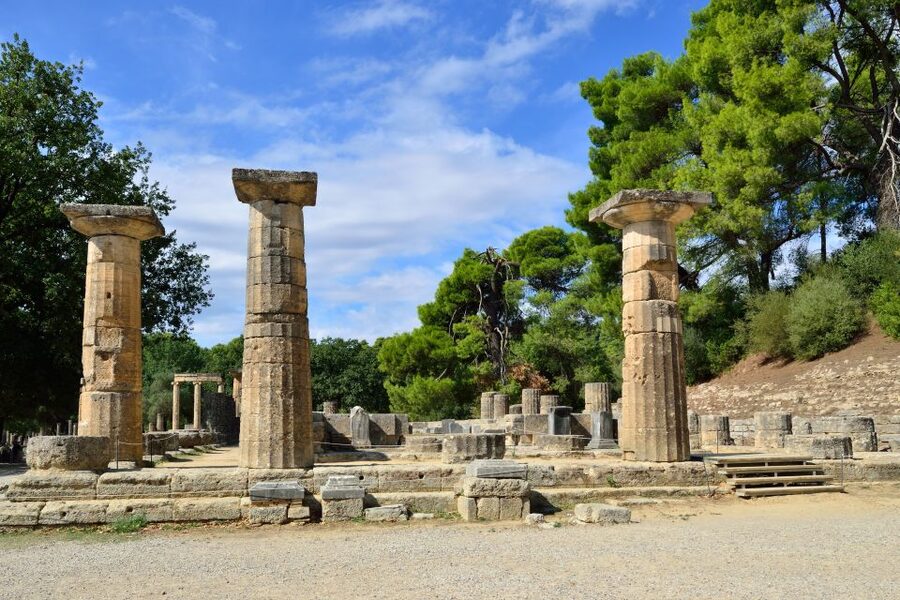
The Temple of Hera is one of the oldest monumental temples in Greece. It is smaller than the Temple of Zeus, but its age and importance make it one of the key stops in the sanctuary.
This area belongs to the Altis, the sacred precinct where temples, altars, monuments, and dedications were gathered. The open arrangement can be hard to picture at first. Take a moment to imagine this as a functioning religious center, not just a collection of ruins.
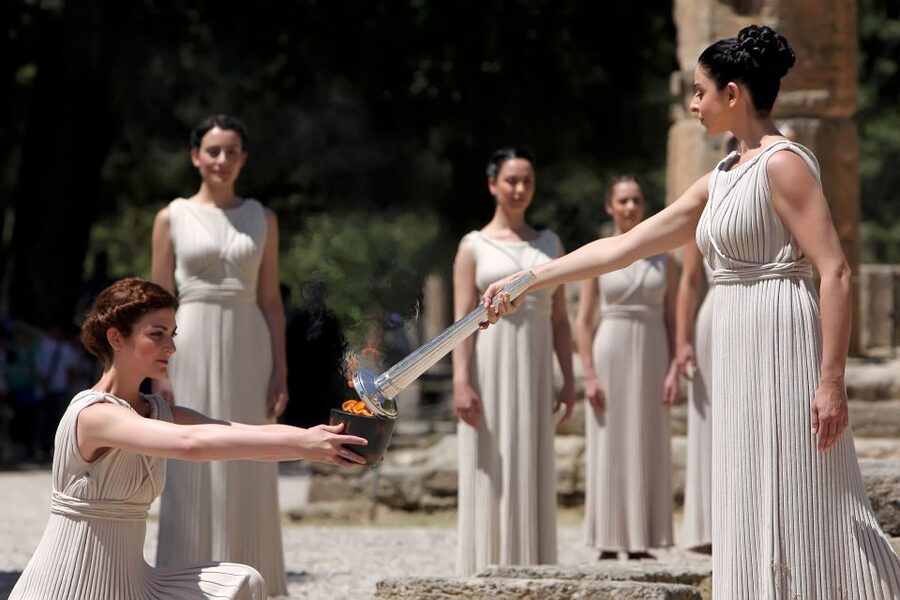
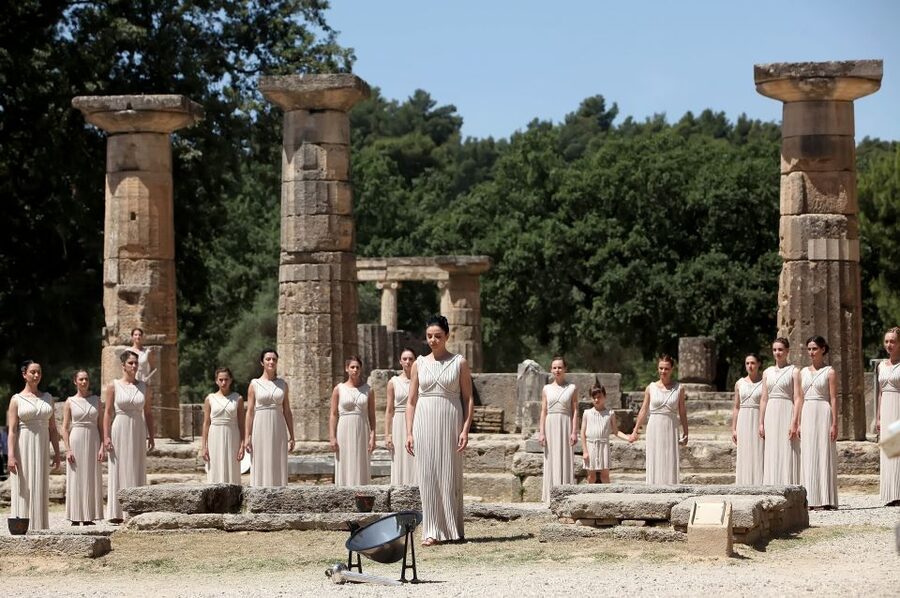
The Temple of Hera is also linked with the modern Olympic tradition because the Olympic flame ceremony takes place in Olympia. The supplied information focuses on the ancient site rather than the modern ceremony, but the connection helps explain why this place still carries such symbolic weight.
I recommend visiting the temples before the museum. The museum will show you sculpture and objects removed from the site, while the archaeological grounds give those objects a physical setting.
The stadium and ancient athletic spaces
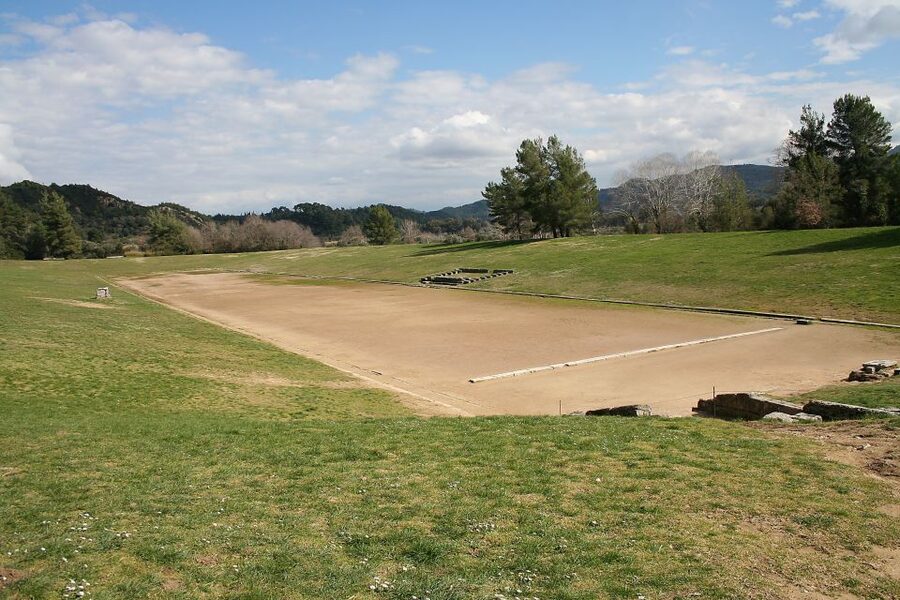
The stadium is one of the most memorable parts of the visit. Here, you can walk into the long open running area and picture athletes competing in the ancient Games.
The effect comes from the simplicity of the space. There are no modern seats, screens, or painted lanes. The earth track and surrounding banks make the stadium feel direct and almost severe. This is a place where the scale of the crowd and the effort of the athletes must be imagined.
You will also see spaces connected with training, including the gymnasium and wrestling school. These areas remind you that the Games were not only about a single race. Athletes prepared for competition in a larger sporting complex, with wrestling, running, and other events requiring strength and discipline.
The hippodrome was another important part of the Olympic setting, although the remains are less easy to read than the stadium. The experience works best if you accept that some parts require imagination. You are seeing the archaeological footprint of an ancient complex, not a fully rebuilt sports center.
If you have a strong interest in athletics, this section may be the emotional high point. If you are mainly interested in sculpture or architecture, the museum may hold your attention longer.
A few more things to do in Greece worth a look
- Athens: Acropolis, Parthenon & Acropolis Museum Guided Tour
★ 4.8 · 9,316 reviews - Athens: Mythology of Delphi, Museum and Arachova Guided Tour
★ 4.6 · 4,008 reviews - Athens: Acropolis, Parthenon & Acropolis Museum Guided Tour
★ 4.8 · 3,579 reviews - Acropolis monuments & Parthenon Walking Tour with Optional Acropolis Museum
★ 5.0 · 2,678 reviews
What you will find in the Archaeological Museum
The Archaeological Museum of Ancient Olympia presents finds from the sanctuary of Zeus and the excavations in the Altis. It gives you the details that the open-air ruins cannot provide.
The museum is especially useful after you have walked around the site. You will have seen the temples and foundations, then you can examine sculptures, architectural fragments, and other objects connected with those buildings.
The collection includes major works from the ancient sanctuary, along with prehistoric finds. The objects help explain how the site changed over a very long period and how offerings, decoration, and religious practice shaped Olympia.
Allow enough time here. A quick pass through the museum can leave you with a few impressive statues but little sense of how the collection fits together. I would treat it as an essential half of the Olympia visit, not a backup plan for rainy weather.
One practical point matters: the Archaeological Museum is the only attraction with a selected entry time. You must enter on the chosen date and during the booked slot, with access permitted from 15 minutes before to 15 minutes after. Plan this first, then fit the archaeological site and Olympic Games Museum around it.
The Museum of the History of the Olympic Games
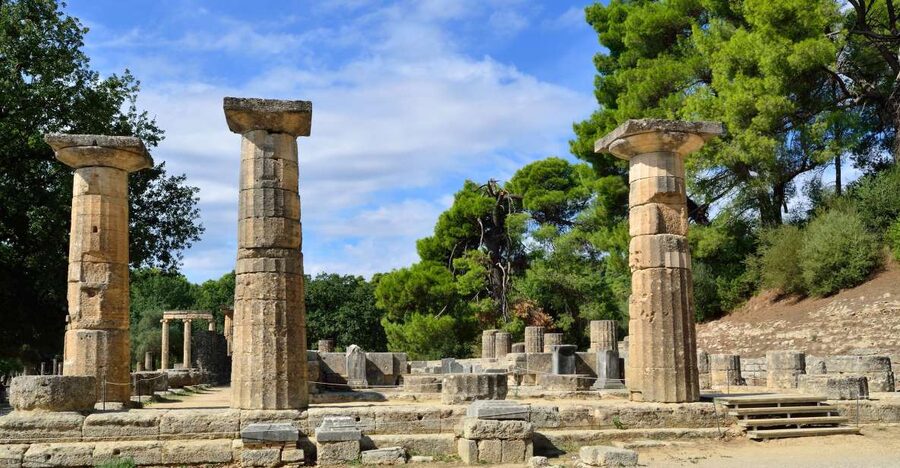
The Museum of the History of the Olympic Games focuses on the ancient Games and displays finds connected with the period in which they took place.
This museum is a good final stop because it brings the athletic story into sharper focus. After seeing the training areas and stadium, you can learn more about the Games themselves and the objects associated with them.
An English self-guided audio tour is included. It is useful if you want more context than the site signs provide, but you should not expect a live explanation or a guide adapting the visit to your interests.
The self-guided setup suits independent visitors. You can move quickly through familiar material or linger over the parts that interest you. Families may also find the museum easier to manage than a long guided talk, although the experience remains educational rather than entertainment-focused.
How the self-guided audio works in practice
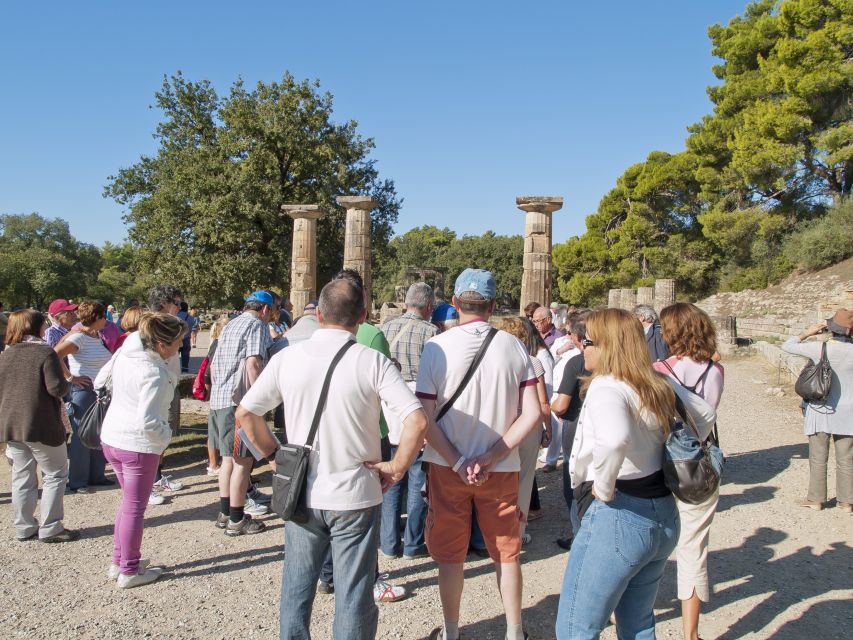
The ticket includes an audio tour for the Olympic Games Museum and includes an audio tour for the archaeological site only if you select that option. English is the listed language.
There is no physical audio device or earphones included. Check the instructions before you arrive and bring what you need for listening. Since the audio stops are reported to be in a random order, keep the site map nearby and do not assume the numbered stops form a natural walking route.
This is the main weakness of the self-guided format. You get privacy and control, but you must handle the navigation yourself. If you prefer a clear story told in walking order, a live guide would be easier. If you like choosing your own pace and skipping material, the audio option is a sensible compromise.
The archaeological site also has limited information boards in some areas. I would read the audio content before moving on, then match it to the remains around you. That small effort can make the open spaces much easier to understand.
Is the $30 ticket good value?
At $30 per person, this is not the cheapest way to enter a Greek archaeological site. The value comes from the three-part access: the archaeological grounds, the main Archaeological Museum, and the Museum of the History of the Olympic Games.
Pre-booking also has practical value. At busy times, you can go directly to entry rather than wait at the ticket office. The difference may be modest on a quiet day, but it matters in July and August, when heat and large groups can turn a short queue into an unpleasant delay.
The ticket is also useful for budgeting. You know the admission cost before your day begins, and you do not need to arrange separate admission for the museums covered by the booking.
Still, compare the cost with your needs. If you only want to see the stadium and temples, the full package may be more than you need. If you want the complete Olympia experience and prefer not to handle local ticket arrangements, the price is easier to justify.
There is no reduced-admission option with this ticket. It is sold at the regular adult price for all ages, even though some people may qualify for free admission under current Greek rules. From April 1, 2025, EU citizens under 25 and non-EU citizens under 18 can receive free admission by showing identification at the ticket booth. People with disabilities can also receive free admission by presenting a Disability Certificate.
Because the booking is non-refundable and the travel date or time slot cannot be changed, check your plans carefully before paying.
Timing, heat, and getting around
The ticket is valid for one day. The archaeological site and Museum of the History of the Olympic Games can be visited at any time on the selected date, while the Archaeological Museum follows the reserved slot.
That flexibility lets you build the visit around your schedule. You could start with the ruins in the cooler morning, visit the Archaeological Museum at its fixed time, and finish with the Olympic Games Museum. Or you could use the museum appointment as your anchor and arrange the outdoor sections around it.
Summer heat is a serious consideration. Much of the archaeological site is open and exposed, and there is little reason to rush through it. Bring water, sun protection, and a hat. An umbrella can help, and a wet cloth around your neck may be welcome on very hot days.
Wear shoes suitable for uneven ground. The site is wheelchair accessible, but the setting remains archaeological, with open spaces and ancient surfaces. Allow time between the attractions so you are not forced to hurry.
No hotel transfers are included. You must arrange your own way to Ancient Olympia, and the ticket does not include transport from a cruise terminal or another starting point.
Who will get the most from this visit?
I would recommend this experience to independent visitors who want to set their own pace and are comfortable reading maps and listening to an English audio guide.
It is especially well suited to:
- People fascinated by the ancient Olympic Games
- Families who prefer a flexible visit instead of a fixed group tour
- Museum lovers who want both archaeology and sports history
- Cruise passengers or day visitors who need pre-booked admission
- Anyone who wants to avoid a possible ticket-office queue
You may want a live guide instead if you need a clear story from start to finish or if ancient ruins are difficult for you to interpret without explanation. The site can feel spare, and the information boards do not always provide enough detail on their own.
The experience is also less ideal if your schedule is uncertain. The fixed museum slot and non-refundable policy make this a poor match for plans that may change.
Should you book Ancient Olympia with this ticket?
Book it if you want all three attractions, value a self-guided day, and have a firm date. The archaeological site gives you the atmosphere, the Archaeological Museum supplies the art and objects, and the Olympic Games Museum explains the sporting tradition.
I would choose the audio option if you enjoy learning as you walk, but I would not depend on it as your only source of direction. Keep a map handy, allow plenty of time for the museum slot, and visit early in hot weather if your schedule allows.
Skip this ticket if you only want a quick look at the ruins, qualify for free admission, or need flexible cancellation. For most people who want the full Ancient Olympia story without joining a guided group, though, the convenience is worth the $30.
FAQ
How long is the ticket valid?
The ticket is valid for one day, on the selected date.
Which attractions are included?
The ticket includes the archaeological site of Ancient Olympia, the Archaeological Museum of Ancient Olympia, and the Museum of the History of the Olympic Games.
Do I need to choose an entry time?
You need to choose a specific date and time slot for the Archaeological Museum. The archaeological site and the Museum of the History of the Olympic Games can be entered at any time on the selected date.
Can I enter the Archaeological Museum outside my time slot?
Entrance to the Archaeological Museum is permitted only during the selected time slot, or from 15 minutes before to 15 minutes after it.
Is a guide included?
No live guide is included. The experience is self-guided, with English audio available for the Olympic Games Museum and for the archaeological site if that option is selected.
Are headphones or an audio device provided?
No physical audio device or earphones are included.
Is the site wheelchair accessible?
Yes, the activity is listed as wheelchair accessible.
Can I cancel or change the booking?
The activity is non-refundable, and the travel date and entry time slot cannot be amended.
Just added in Greece
- Lindos: Submarine Cruise with Swimming Stop at Navarone Bay★ 4.7 · 120 reviews
- Kefalonia Wine Tour★ 5.0 · 373 reviews
- Ancient Olympia Half-Day Tour from Katakolo Cruise Port★ 4.5 · 228 reviews
- Half Day Olympia Private Tour★ 5.0 · 105 reviews
- Lefkada Kayak : Explore Blue Cave with a Taste of Greece★ 5.0 · 149 reviews
- BL | A boat Trip To Blue Lagoon★ 5.0 · 211 reviews
- Agios Nikolaos: Spinalonga PM Catamaran Cruise with Dinner★ 4.8 · 88 reviews
- Catamaran Semi Cruise Paros Antiparos includes Food and Drinks★ 5.0 · 208 reviews
Ancient Olympia Tours, compared.
4-Day Classical Greece Tour: Epidaurus, Mycenae, Olympia, Delphi, Meteora
Read our review →
Katakolo Port: Transfer to Ancient Olympia and VR Audio Tour
Read our review →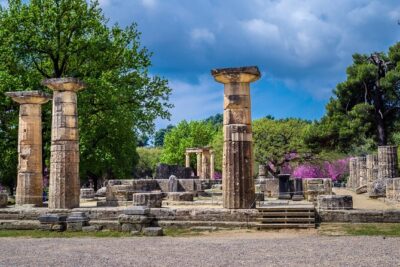
Ancient Olympia Half-Day Tour from Katakolo Cruise Port
Read our review →
Browse the lists this tour appears in