
Reviewed · ACROPOLIS & ATHENS HIGHLIGHTS
Acropolis and Acropolis Museum Private Tour with Licensed Expert
The best part of this Athens tour is the pairing of the Acropolis and Acropolis Museum. On the hill, you see the temples in their setting. In the museum, you see original sculptures and details close up. A licensed guide connects the two, so the marble ruins become more than a parade of famous names.
I like the private format because you can stop, ask questions, and set a pace that works for your group. I also like the choice of add-ons, especially the Ancient Agora or the five-hour city tour by luxury vehicle. The main catch is cost: $188.65 per person, plus up to €50 for Acropolis and museum admission, is a serious outlay.
Plan carefully for heat, crowds, and walking. Early morning works best in summer, and the route includes uneven stone and uphill sections. The guide quality is usually a major strength, with guides such as Betty, Eva, Lydia, Vicki, Nicole, and Valia earning especially warm praise for clear explanations and friendly teaching.
Key points to know before booking
- A licensed guide leads the whole visit: Your guide can enter the Acropolis and museum with you and explain the sites in English.
- The standard route takes about three hours: Roughly 80 minutes goes to the Acropolis and 80 minutes to the museum, with meeting and walking time around them.
- Tickets are not included: Budget €30 for the Acropolis and €20 for the museum, or €50 per person for both.
- The Acropoli Metro Station is the meeting point: Meet at street level near 7 Makrygianni Street, close to the museum.
- Timing matters in hot weather: Early starts can mean cooler stone, softer light, and fewer people at the top.
- You can change the focus: Choose Acropolis only, Acropolis plus the Ancient Agora, or a five-hour vehicle tour with central Athens sights.
Why the Acropolis and museum belong together
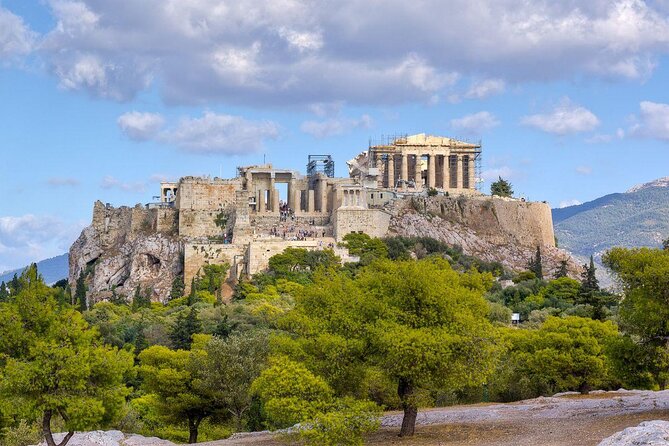
The Acropolis is one of those places where a guide earns their fee quickly. Without context, you see columns, foundations, and marble figures. With a good guide, you begin to understand how religion, politics, art, theater, and civic life met on this rocky hill.
This tour gives you two different views of ancient Athens. The first is outdoors, among the temples and theaters. The second is indoors, where the Acropolis Museum protects original works and lets you study them at eye level.
I especially like this order because the hill gives you the broad picture first. You see where the buildings sit, how the sacred area relates to the city, and why the Parthenon dominates everything around it. At the museum, your guide can then point out the sculptures and architectural pieces that make the ruins easier to understand.
The private setup also changes the mood. You are not trying to hear a guide over a large crowd or waiting for a whole bus group to move. Groups of six or more receive a whisper communication system, but a private tour still gives you more freedom to ask about the details that catch your eye.
More of the old city on foot in Athens:
- Athens: Acropolis & up to 5 Archaeological Sites Combo Pass
★ 4.4 · 12,619 reviews - Athens: Acropolis Ticket with Optional Audio or Live Guide
★ 4.2 · 11,055 reviews - Athens: Acropolis, Parthenon & Acropolis Museum Guided Tour
★ 4.8 · 9,316 reviews
Meeting at Makrygianni Street near the Acropoli Metro

Your guide meets you at street level at the Acropoli Metro Station, near 7 Makrygianni Street. This is a practical location, close to the Acropolis Museum and public transportation.
The meeting area also serves as a useful introduction. From here, you can begin looking at the Acropolis walls and hear about the earlier Mycenaean presence on the hill before climbing toward the classical monuments. That opening helps place the site in a much longer story than the fifth century BC alone.
If you select the vehicle option, the arrangement changes. A driver meets you at your central Athens hotel, cruise ship terminal, or another agreed address, then returns you after the wider city visit. For the regular Acropolis and museum tour, you arrange your own way to the metro meeting point.
Theater of Dionysus: where Greek drama began
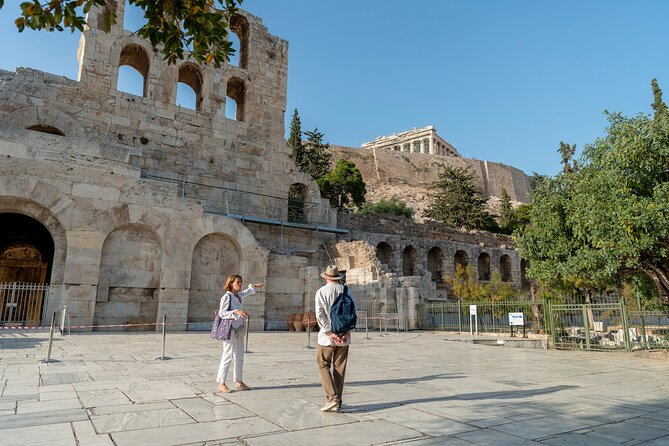
The route usually begins near the Theater of Dionysus on the southern slope of the Acropolis. Its stone seating follows the natural curve of the hillside, and the theater could hold about 25,000 people.
This is an important stop because it shows that the Acropolis was not only a place of temples. It was tied to public performance and civic life. Famous Greek plays were first presented here, in front of an audience gathered below the sacred hill.
You do not need a long lecture to appreciate the theater. The shape of the site does much of the work. Still, this is where a guide can explain why theater mattered so much in Athens and how the setting connected religious festivals with public debate and drama.
Propylaia and the climb to the sacred hill
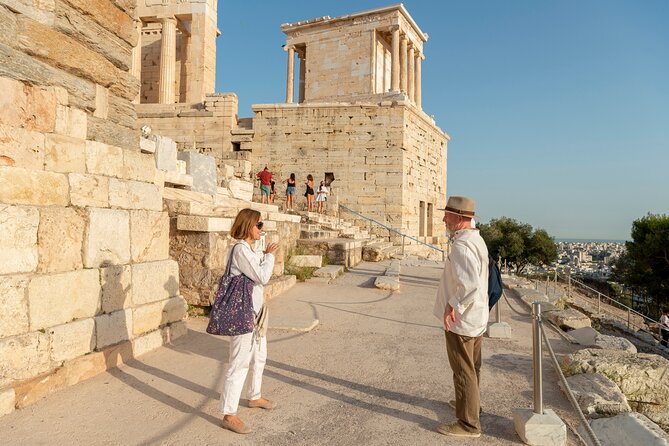
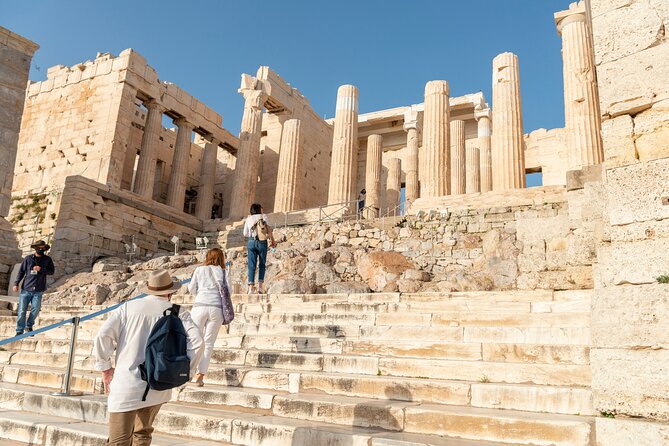
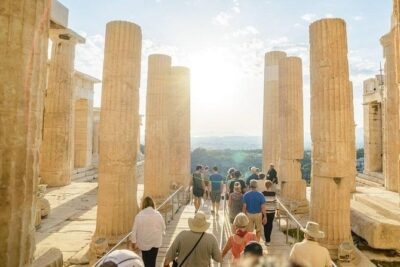
From the theater, you climb toward the Propylaia, the monumental gateway to the Acropolis. This is one of the more demanding parts of the visit, especially in summer or for anyone unused to uneven stone surfaces.
The approach gives you a strong sense of ceremony. In ancient times, visitors passed through this gateway before reaching the temples. The guide can explain how the entrance framed the experience and how the hill once appeared to people arriving for religious festivals.
The climb is not a technical hike, but it is still a real walk. Wear sturdy shoes, take your time, and bring water. One useful piece of advice from the experience is to go slowly on hot days. The guide can adjust the pace because this is a private tour, but the stone, sun, and uphill route remain.
A few more things to do in Athens worth a look
- Athens: Mythology of Delphi, Museum and Arachova Guided Tour
★ 4.6 · 4,008 reviews - Athens: Acropolis, Parthenon & Acropolis Museum Guided Tour
★ 4.8 · 3,579 reviews - Acropolis monuments & Parthenon Walking Tour with Optional Acropolis Museum
★ 5.0 · 2,678 reviews - Athens All Included: Acropolis and Museum Guided Tour with Ticket
★ 4.5 · 2,673 reviews
Temple of Athena Nike and the first great views
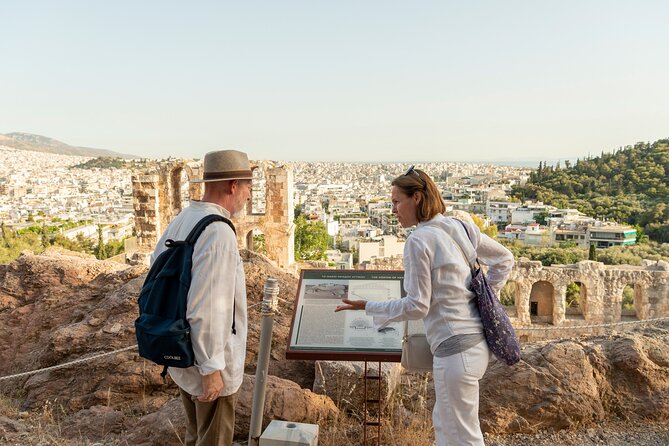
Near the entrance is the Temple of Athena Nike, a small Ionic temple built around 420 BC. Its position gives it a clear view over Athens, and its size makes it easy to overlook beside the Parthenon.
That would be a mistake. The temple is an early example of the elegant Ionic style on the Acropolis, and its location made it a powerful welcome to the sacred precinct. Your guide can explain its connection to Athena and the role of victory in Athenian public life.
This is also one of the first places where the city opens out below you. The view helps explain why the Acropolis was both a religious center and a symbol of Athenian power.
The Parthenon, explained beyond the postcard
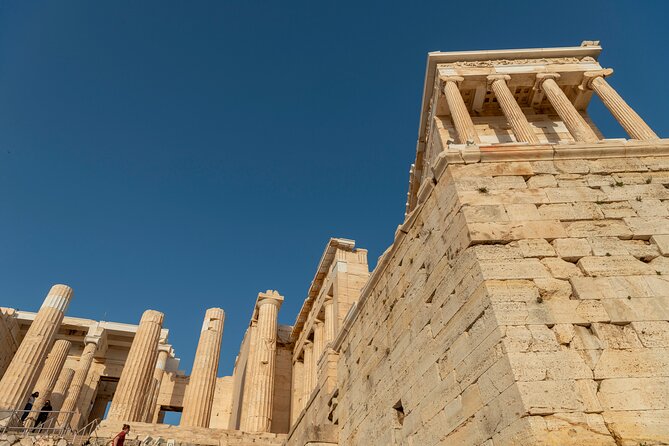
The Parthenon is the centerpiece of the visit. Built during the fifth century BC, it was dedicated to Athena and formed the heart of ancient Athenian ceremony and worship.
I find a guide most useful here because the building is easy to admire but harder to read. The guide can point out the design choices, explain its construction, and connect the temple to the political confidence of Athens during its classical golden age.
You will also hear the myths tied to Athena and the city. The tour is not limited to dates and building terms. Guides such as Betty, Vicki, Lydia, Eva, and Nicole are praised for storytelling, humor, and the ability to make ancient people and ideas feel close to the present.
The Parthenon is also crowded and exposed. You may need patience for photographs, and the bright sun can be tiring. The best time is generally early, especially in late July and other hot periods. An afternoon Acropolis-only visit may offer warmer light on the honey-colored marble, but it will not necessarily offer the easiest conditions.
Erechtheion and the myths of the Acropolis
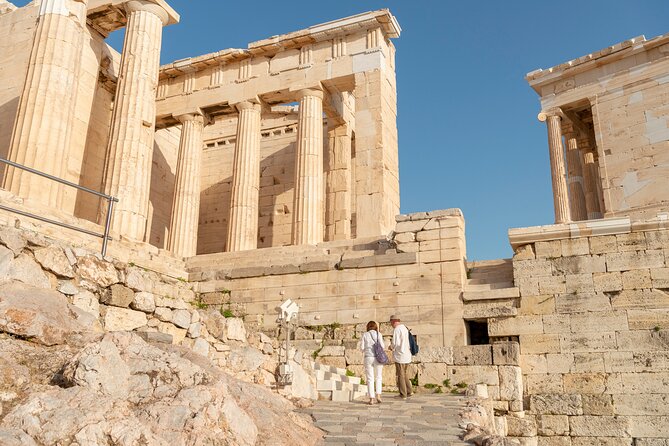
The Erechtheion is the second major temple on the hill and one of its most distinctive buildings. It was connected with Athena and other important gods and heroes, and its unusual design reflects several layers of religious meaning.
The famous sculpted female figures associated with the building are especially important in the museum, where you can see related originals and details more closely. On the hill, the guide can explain the myths and show how the temple differs from the more orderly Parthenon.
This is a good point to ask questions. Private touring works well here because you can pause over the stories that interest you, from the contest between Athena and Poseidon to the sacred associations of the site. The guide can also help you separate ancient belief from later interpretation.
Herodes Atticus Theater and the end of the hill visit
The Odeon of Herodes Atticus sits on the southern side of the Acropolis. Herodes Atticus built it in AD 161 in memory of his wife, and the marble theater is still used for performances.
Its continued use gives the ancient site a living connection to Athens today. You see a Roman-era building within the Acropolis setting, not just monuments from one narrow period.
After about 80 minutes on the hill, the tour moves toward the museum. The exact flow can change, but expect a steady walk and several stairs. If you choose the Acropolis-only option, the tour may finish inside the Acropolis, leaving you extra time for photographs and views.
The Acropolis Museum: original pieces at eye level
The museum is a short distance from the Acropolis and provides the indoor half of the experience. It contains original masterpieces, models, videos, and interactive displays that help explain what you have just seen outdoors.
The museum matters because many details on the hill are difficult to read from ground level. Here, you can study sculpture and architectural fragments at close range. Your guide focuses on the most important pieces rather than trying to cover every object in the building.
Allow about 80 minutes for this portion. That is enough for a guided introduction, but not enough for a slow, independent look at every gallery. If you enjoy museums and want extra time with individual objects, ask your guide where to return after the tour ends.
The museum is also air-conditioned, a major advantage after a hot morning on the Acropolis. One guide, Lisa, is specifically praised for suggesting the museum at the right point in the visit. The indoor stop gives your feet and attention a break before you continue your Athens day.
Choosing the Ancient Agora instead
The Acropolis and Ancient Agora option lasts about three hours and replaces the museum with the Agora. This is a good choice if you want to understand Athenian public life, politics, and philosophy in addition to the sacred hill.
The route between the Acropolis and Agora includes walking over rough cobbles. It is not the best choice if you have limited mobility, and you should expect the tour to finish at the Agora rather than return you to the metro station.
The Agora option also suits anyone more interested in the daily workings of Athens than in sculpture and museum displays. Guides have covered the Acropolis, Areopagus, and Agora together, using mythology, philosophy, and the story of Paul’s sermon to connect the locations.
The five-hour city tour by luxury vehicle
The vehicle option is the broadest choice. It lasts five hours and includes the Acropolis, Acropolis Museum, Temple of Zeus, Hadrian’s Arch, Olympic Stadium, Athens Trilogy, Syntagma Square, and the guards.
Return transfers from a cruise terminal, central hotel, or other address are included. A driver handles the movement between sites, while a licensed guide accompanies you at the Acropolis and museum.
This option is useful if you have limited time in Athens or want to cover major central sights in one outing. It is less focused than the three-hour walking tour, so do not choose it expecting long periods at every stop. The advantage is reach and convenience.
Past visitors have especially valued drivers who explain Athens, stop at important sites for photographs, and offer food suggestions. Still, the quality of the day depends on traffic, the timing of your pickup, and how much time you want at each location.
Price, tickets, and what the private format buys you
The listed price is $188.65 per person. Entrance fees are extra: €30 for the Acropolis and €20 for the Acropolis Museum, for a total of €50 per person if you choose the standard combination.
That makes the full cost considerably higher than walking in with a basic audio guide. You are paying for a private licensed expert, direct explanations, flexible pacing, and help making sense of a crowded site. For two people, the price can feel steep. For a family or group that values a private guide, the per-person cost may become easier to justify, especially with group discounts.
The operator can purchase skip-the-line tickets after booking, but you need to respond to its message. If you do not reply, the assumption is that you have arranged your own tickets and timed entries. That is an important detail. Do not arrive expecting admission to be included in the tour price.
Free cancellation is available up to 24 hours before the start time. Poor weather can lead to a new date or a full refund, and changes made within 24 hours are not accepted.
Who will get the most from this tour
I would choose this tour if you want history explained in plain language, care about mythology and architecture, or are visiting the Acropolis for the first time. It is also a strong fit for families, since guides such as Valia have been praised for keeping children involved.
It suits couples and small groups who dislike large tour buses and want to ask questions. Larger private groups can also take part, with whisper equipment for six or more people.
I would think twice if you want a cheap entry ticket and prefer to explore alone. The tour does not remove the physical demands of the site, and the admission fees are not included. Visitors with limited mobility should be especially cautious with the Acropolis and Agora route because of stairs, slopes, and rough cobbles.
Should you book the Acropolis private tour?
Book it if you want the Acropolis to make sense, not just look impressive. The strongest reason is the licensed guide, with names such as Betty, Lydia, Vicki, Eva, Nicole, and Catherine repeatedly praised for clear teaching, warmth, and strong command of Greek history.
Choose the Acropolis and museum combination for the best balance. Pick the Agora if public life and philosophy interest you more than original sculpture. Choose the vehicle version if hotel or cruise pickup and a wider look at Athens matter most.
My practical advice is simple: book an early start in summer, confirm your admission tickets, wear shoes suited to stone, and allow more time after the tour if you want unhurried museum browsing. At this price, preparation makes the difference between a costly outing and a memorable introduction to Athens.
FAQ
How long does the standard Acropolis and museum tour last?
The standard private tour lasts approximately three hours. The time is roughly split between 80 minutes at the Acropolis and 80 minutes at the Acropolis Museum, with some time for movement between the sites.
Where does the tour meet?
The meeting point is at street level by the Acropoli Metro Station near 7 Makrygianni Street in Athens. It is close to the Acropolis Museum.
Are admission tickets included?
No. The Acropolis admission fee is listed as €30, and the Acropolis Museum fee is €20. The combined admission cost is €50 per person.
Can the tour provider arrange skip-the-line tickets?
Yes. After booking, the provider will contact you to ask if you want it to purchase skip-the-line tickets. You need to respond to that message. If you do not reply, you are treated as having arranged your own tickets.
What sites are included in the vehicle option?
The five-hour vehicle option includes the Acropolis, Acropolis Museum, Temple of Zeus, Hadrian’s Arch, Olympic Stadium, Athens Trilogy, Syntagma Square, and the guards. Return transfers are included from a cruise ship, central Athens hotel, or another address.
Is the Ancient Agora option suitable for people with limited mobility?
It may not be suitable because the route between the Acropolis and Ancient Agora includes walking over rough cobbles. The tour ends at the Agora.
Is the tour private?
Yes. Only your group participates in the private activity. This lets you ask questions and set the pace with your guide.
What happens if the weather is poor?
The experience requires good weather. If it is canceled because of weather, you will be offered another date or a full refund. Free cancellation is also available if you cancel at least 24 hours before the start time.
Just added in Athens
- Athens: Half-Day Morning Catamaran Cruise with Meal & Drinks★ 4.9 · 221 reviews
- Athens hotels to Athens airport Private departure transfer★ 5.0 · 285 reviews
- Best of Athens Half Day Private Tour★ 5.0 · 353 reviews
- Electric Bike Tour of Athens by Night★ 5.0 · 355 reviews
- Argolis: Full-Day Tour in Mycenae & Nafplio★ 4.2 · 350 reviews
- Athens: Riviera Catamaran Cruise with Meal and Drinks★ 5.0 · 345 reviews
- Athens: Delphi, Corycian Cave, and 300 Battlefield Day Trip★ 4.8 · 344 reviews
- 3-Day Classical Greece Tour: Epidaurus, Mycenae, Nafplion, Olympia, Delphi★ 4.5 · 342 reviews
Acropolis & Athens Highlights, compared.
Acropolis & up to 5 Archaeological Sites Combo Pass
Read our review →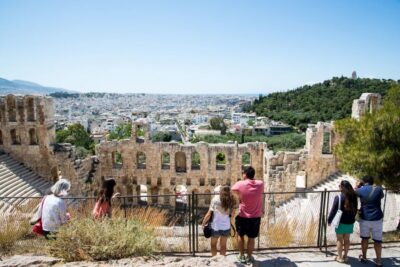
Acropolis, Parthenon & Acropolis Museum Guided Tour
Read our review →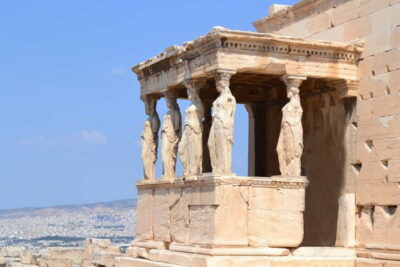

Acropolis monuments & Parthenon Walking Tour with Optional Acropolis Museum
Read our review →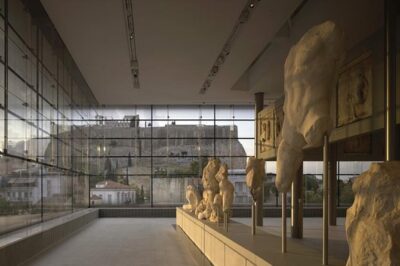
Athens All Included: Acropolis and Museum Guided Tour with Ticket
Read our review →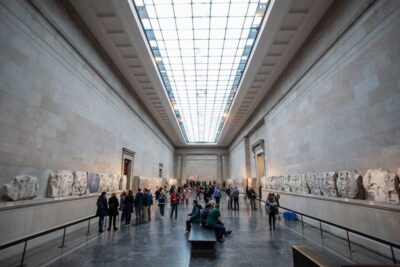
Acropolis Museum Ticket with optional Audio Guide
Read our review →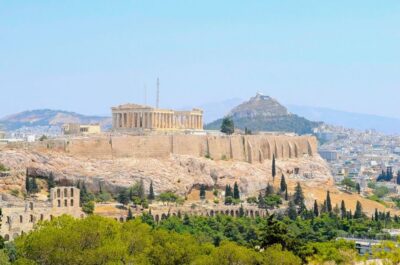
Acropolis Ticket & Optional Self-Guided Audio Tours
Read our review →Browse the lists this tour appears in