
Reviewed · ACROPOLIS & ATHENS HIGHLIGHTS
Athens: Acropolis, Parthenon & Acropolis Museum Guided Tour
The best part of this tour is the way it turns a collection of weathered stones into a readable story. You walk from the Theatre of Dionysus up to the Parthenon, with a guide explaining why each building mattered, rather than simply pointing out the biggest one. Guides such as Elizabeth, Anna, Hermes, and Katerina have earned especially warm praise for clear storytelling, humor, and patience with children.
I like the connected route through the Acropolis monuments, and I like the choice to add the Acropolis Museum, where surviving sculpture and architectural pieces make the hilltop ruins easier to understand. The main drawback is cost: the $70 guide fee does not include Acropolis or museum admission, so the final bill is higher. The climb is also uneven and not suitable for wheelchair users.
Key points to know before booking
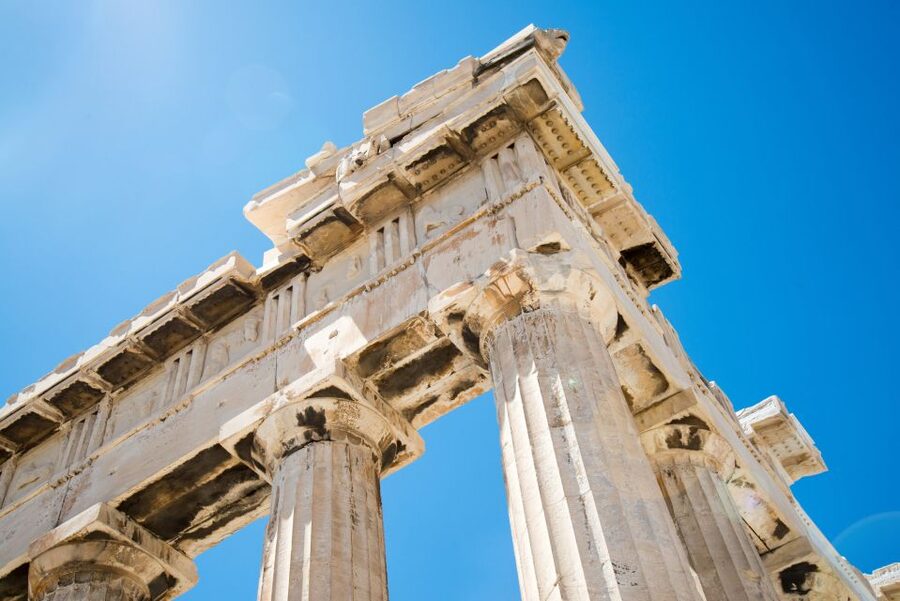
- The Parthenon is the climax, not the whole tour: You also see the Propylaea, Temple of Athena Nike, Erechtheion, Theatre of Dionysus, Odeon of Herodes Atticus, and Temple of Asclepius.
- The museum option adds useful context: Its galleries help you connect loose sculptures and carvings with the monuments you see above.
- Guides do more than recite dates: Mythology, architecture, ancient society, and modern Greek life all come into the conversation.
- The walk includes a real uphill climb: Comfortable shoes, water, sunscreen, and a hat matter, especially in hot weather.
- Admission is extra: The guide fee is $70 per person, while Acropolis tickets cost €30 and museum tickets cost €10 to €20, according to the supplied details.
- A private group is available: This suits families and people who want to ask many questions or set a gentler pace.
Starting at Porinou Street near the Acropolis
Your meeting point is the Athens Walks ground-floor office at Porinou 5, in postal code 11742. Arrive at least 15 minutes early. Only one person from your group needs to check in inside, which keeps the process simple if the rest of your party is waiting outside.
This location is near the Acropolis and Acropolis Museum area, but central Athens streets can be confusing if you are arriving for the first time. Give yourself extra time instead of cutting it close. One family got lost on the way, and the guide waited for them, but you should not count on that happening every time.
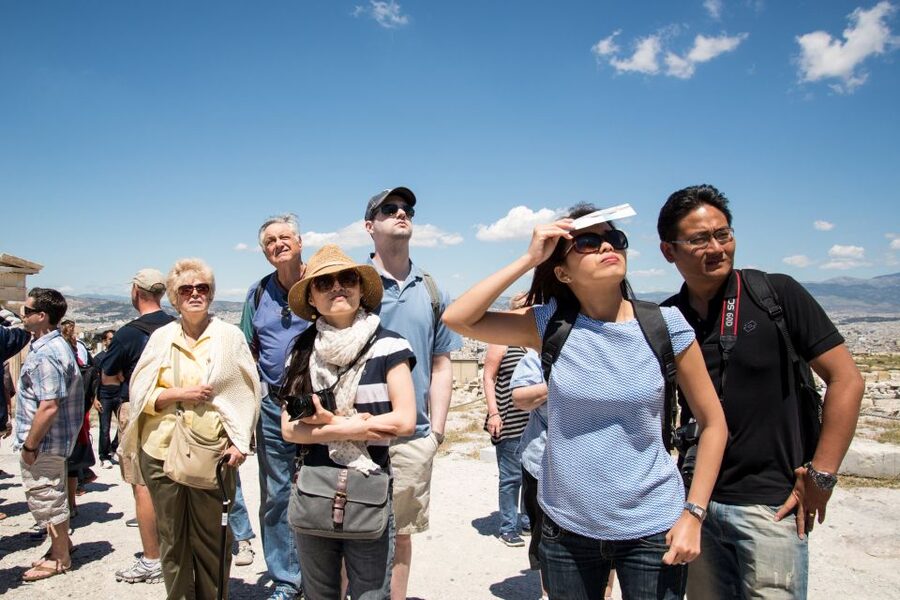
At check-in, the company assigns you to your group and provides hearing devices. That is a small but useful feature at a crowded archaeological site. You can hear the guide without standing shoulder to shoulder, though you still need to stay close enough to follow the route.
The experience lasts from two to four hours, depending on the option you book. The shorter format can work well if you mainly want the hilltop monuments. The longer version gives the museum enough time to feel worthwhile rather than rushed.
More of the old city on foot in Athens:
- Athens: Acropolis & up to 5 Archaeological Sites Combo Pass
★ 4.4 · 12,619 reviews - Athens: Acropolis Ticket with Optional Audio or Live Guide
★ 4.2 · 11,055 reviews - Athens: Acropolis, Parthenon & Acropolis Museum Guided Tour
★ 4.8 · 9,316 reviews
Walking past the Theatre of Dionysus
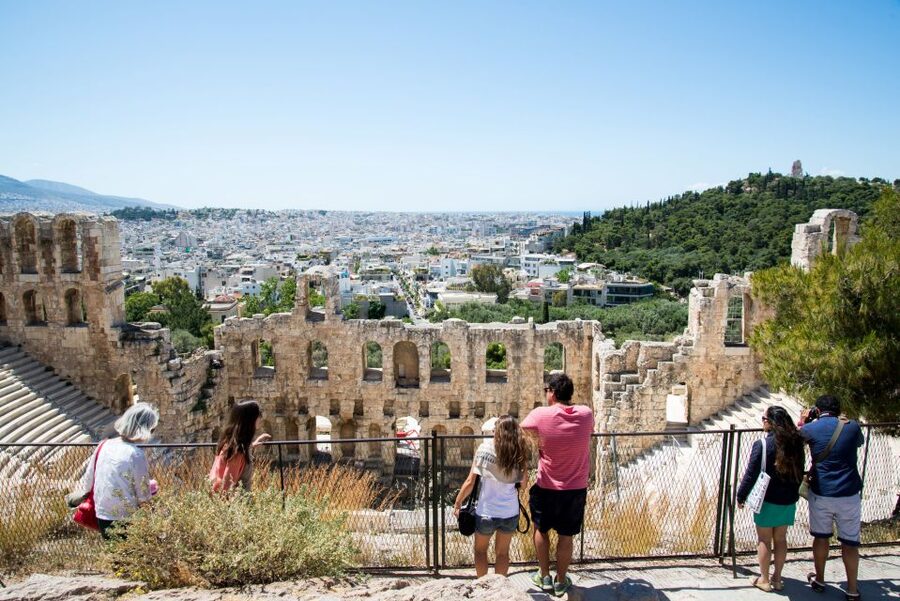
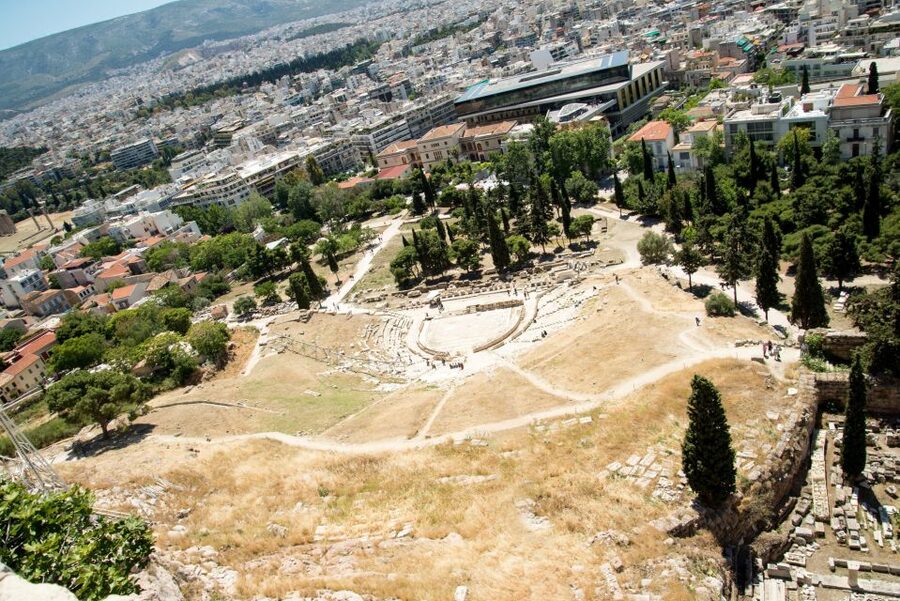
The route begins with the lower monuments of the Acropolis area, including the Theatre of Dionysus. This matters because it places the Acropolis within the public life of ancient Athens. You are not looking only at temples for gods. You are also looking at the setting for drama, civic gatherings, healing, worship, and political identity.
The Theatre of Dionysus is presented as the first great theater of humanity. Your guide can help explain how drama connected with religious festivals and public life. This is the sort of background that can be easy to miss if you stroll past the stone seating alone.
The route also includes the Temple of Asclepius, linked with healing, and the Odeon of Herodes Atticus. These stops give you a wider view of the hill. The Acropolis was not a single building, and the tour does a good job of showing how several sites worked together.
The path rises from here. Guides have broken the climb into frequent stops, using short explanations to give your legs a rest. That approach is especially helpful in summer or with children. You should still expect uneven paving, slopes, and exposed sun.
Reaching the Propylaea and Temple of Athena Nike
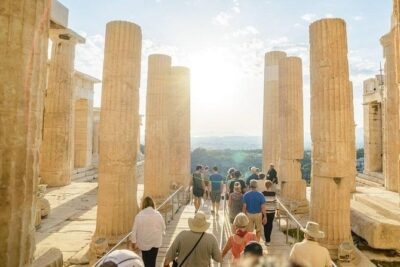
The Propylaea is the monumental gateway to the Acropolis. It prepares you for the grand buildings beyond, and its scale helps explain how carefully ancient Athens framed the approach to its sacred center.
Near the entrance, you see the Temple of Athena Nike, also called the Temple of Wingless Victory. Its compact size can make it easy to overlook beside the Parthenon, but the guide can show why its position and dedication mattered.
This is one reason I recommend a guide for a first visit. The Acropolis is visually overwhelming. Without help, you may remember the Parthenon but miss the smaller temple, the gateway, or the relationship between the buildings.
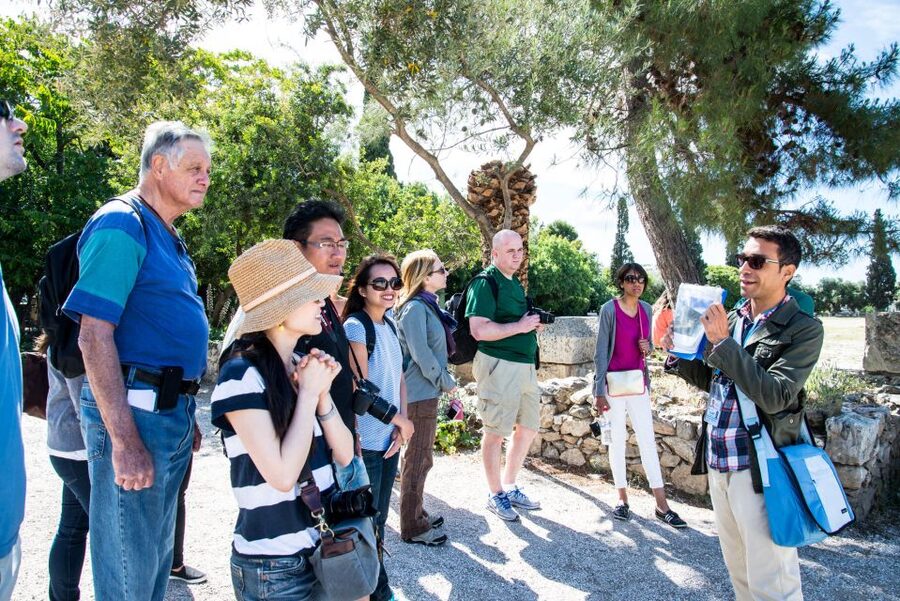
The tour is not just a stop-and-listen experience. You can ask questions, and the guides have been praised for adjusting explanations for families, teenagers, and visitors with different levels of interest. Several guide names appear in the feedback, including Maria, Rosa, Mariza, Anna, Alexandra, and Thanasis. You cannot request a particular person unless the operator confirms it, but the repeated strength of the guiding is a major reason to book.
The Erechtheion and its Caryatids
The Erechtheion is one of the most memorable stops because of the Porch of the Caryatids. Instead of ordinary columns, sculpted female figures support the porch. Their unusual form makes the building instantly recognizable, but the guide adds the details that give the sight weight.
This is also a good place to ask about the difference between a monument’s appearance and its original purpose. Ancient buildings often carried several layers of religious meaning, and the guide explains how the Acropolis functioned at the center of classical civilization.
The Caryatids you see on the building are copies. The original sculptures are protected in the Acropolis Museum, apart from the one held by the British Museum. The supplied tour description does not spell out this conservation detail, so ask your guide about it if you want to connect the hilltop view with the museum collection.
The Erechtheion can be less visually obvious than the Parthenon, but I find it one of the most rewarding stops. It rewards close looking. A guide also helps you notice details that disappear when the area is crowded.
A few more things to do in Athens worth a look
- Athens: Mythology of Delphi, Museum and Arachova Guided Tour
★ 4.6 · 4,008 reviews - Athens: Acropolis, Parthenon & Acropolis Museum Guided Tour
★ 4.8 · 3,579 reviews - Acropolis monuments & Parthenon Walking Tour with Optional Acropolis Museum
★ 5.0 · 2,678 reviews - Athens All Included: Acropolis and Museum Guided Tour with Ticket
★ 4.5 · 2,673 reviews
The Parthenon and views over Athens
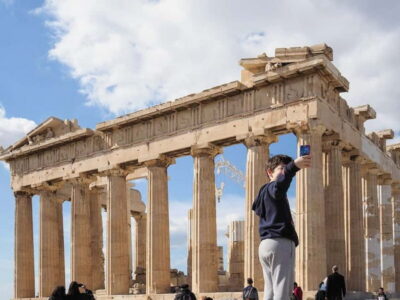
The Parthenon is the crowning stop, and the first sight of it still carries real force. You see the scale, the columns, the damage, and the ongoing work of preserving a structure that has survived more than 2,500 years of change.
A good guide explains the Parthenon as architecture, religious building, political statement, and work of art. You learn about its connection to Athena, the city’s identity, and the sculptural program that once made the building far more colorful and complete than the pale marble suggests.
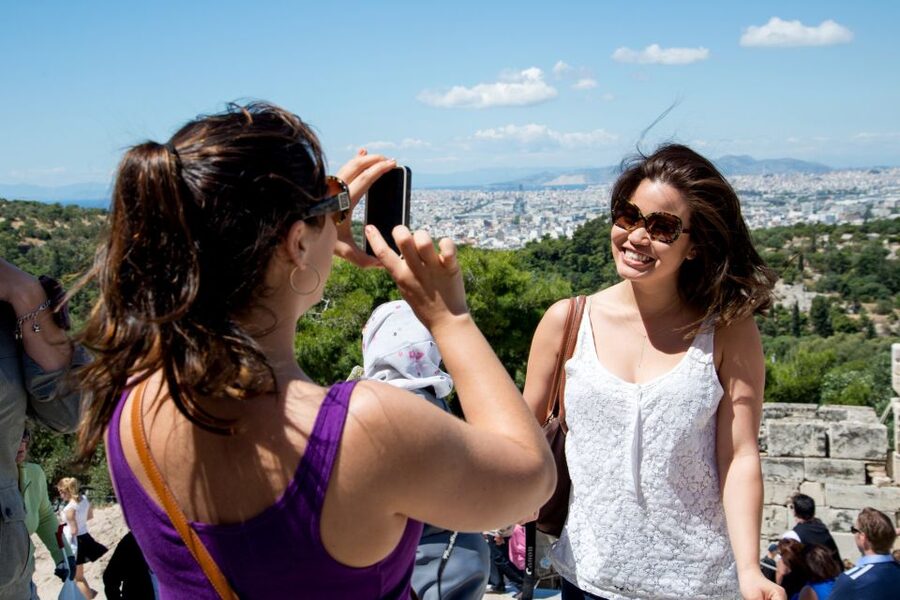
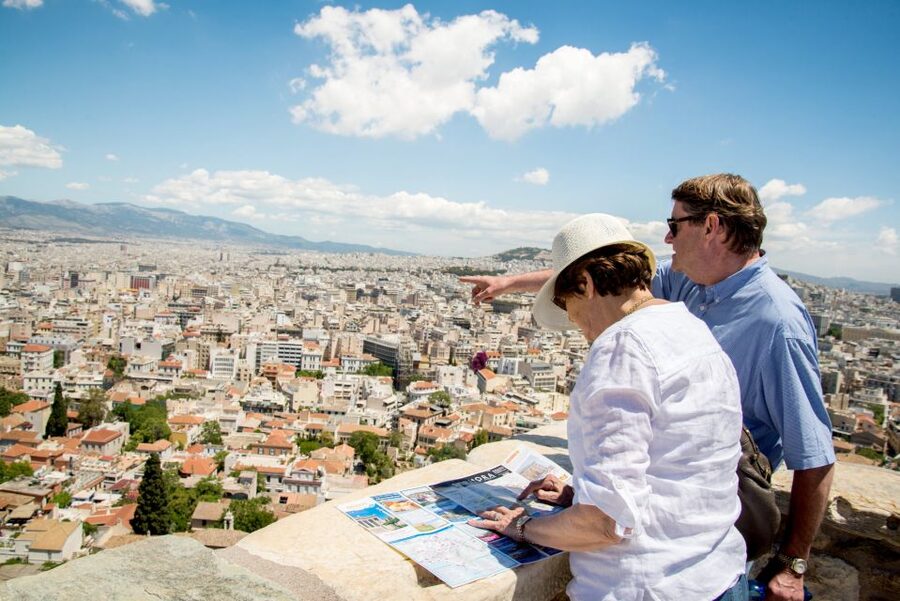
The tour also gives you time for photographs of Athens below. The view is part of the experience, not an extra. From the hill, the modern city spreads out around the ancient summit, making the connection between present-day Athens and its classical past hard to miss.
Do not expect a quiet photo stop. The Acropolis is one of Greece’s busiest sights, and the top can feel crowded. Your guide can help you find good angles and take group photographs, a detail several families appreciated. Still, you should protect your phone and keep your attention on the uneven ground.
The length of the visit affects how satisfying this section feels. A two-hour tour can cover the main monuments with strong commentary. A longer tour allows more questions, slower photographs, and a less hurried pace, especially in a private group.
Adding the Acropolis Museum below the hill
The museum option is worth serious thought. The Acropolis gives you the setting and the surviving buildings. The museum gives you sculpture, carved architectural pieces, and a clearer sense of what the monuments looked like and how they developed.
The building is described as state of the art, with galleries arranged to display relics from ancient Greece. The museum visit helps answer questions the hilltop cannot. What did the missing statues look like? Which pieces belong to which building? How did artists handle clothing, anatomy, gods, and ideal beauty?
Guides such as Katerina and Anna have been praised for arranging the museum in a logical historical sequence. That is important because a museum can otherwise become a parade of marble fragments. With a guide, you have a better chance of understanding the objects as part of a story.
The museum is also a useful break from the sun and uphill walking. Families may find it easier to keep children engaged when the guide changes the setting and uses sculpture and mythology to explain the ancient world. One guide adjusted the pace for tired children and extreme heat, which is the kind of flexibility that makes a long visit more manageable.
There is one scheduling point to watch. On Mondays, the Acropolis Museum closes at 4 p.m. The tour then visits the Acropolis monuments and Ancient Agora instead. Check your selected departure time and the day of your visit before booking if the museum is important to you.
Museum admission is separate and listed at €10 to €20 per person. The exact fee depends on the applicable ticket category. People under 18 receive free access, and anyone with an EU passport under 25 receives free access, according to the supplied information. Bring a passport or identity card, especially if you may qualify for reduced admission.
What the $70 price really buys you
The advertised price is $70 per person for the guide. It does not include the Acropolis ticket, listed as €30 per person, or the museum ticket, listed as €10 to €20 per person. There is no hotel pickup or drop-off.
That makes this a guide-first purchase. You are paying for interpretation, route management, questions, and a smoother visit, not for admission alone. If you already read widely about Greek architecture and prefer moving independently, the extra fee may feel high.
I think the price is easier to justify for a first visit, a family group, or anyone who wants the mythology and architecture explained in plain language. Several families found that the guides kept children involved, answered many questions, and adjusted the pace. A private group can also be good value when divided among several people, though one past booking found the total expensive for six people once the guide fee and admissions were added.
The ticket arrangement deserves attention. The activity includes skip-the-ticket-line access, yet the information also tells you to book entrance tickets online through the official Acropolis site before the tour. Some guides in past visits purchased tickets in advance, but you should follow the current instructions attached to your booking rather than assume admission is handled for you.
Guide quality, language, and group style
The strongest feature here is the guiding. The feedback repeatedly praises clear explanations, historical and mythological context, patience, humor, and the ability to answer questions. Hermes was praised for wit and dry cultural commentary. Thanasis was described as an academic-level guide who connected philosophy, art, architecture, and ancient thought.
Those descriptions give you a useful sense of the range. Some guides may teach in a formal, detailed way. Others may rely more on stories, jokes, and family-friendly questions. Either style can work, but the experience depends on the person assigned to your group.
Tours are offered in English, Italian, German, French, and Spanish. The supplied information does not guarantee a specific guide or dialect, so choose your language carefully when booking.
A private group is available. Private touring is especially useful if you have children, older family members, many questions, or a strong preference for stopping often. Shared groups can cost less overall, but you may have less control over pace and photo breaks.
Heat, footwear, and access
Wear sturdy, comfortable shoes. This is a walking tour over stone surfaces with an uphill section, and sandals with poor grip will make the climb less pleasant.
Bring water, sunscreen, sunglasses, and a sun hat. Reviews describe very hot conditions, including temperatures around 32 degrees Celsius, and the Acropolis offers limited shade. Morning or cooler-season departures may be more comfortable, but the activity details do not promise a specific temperature or crowd level.
Large bags and luggage are not allowed, and pets and smoking are prohibited. Pack lightly. You need your identity document if you are seeking a reduced ticket, but you should not arrive with airport-style luggage.
The activity is listed as not suitable for wheelchair users. One older account describes a guide arranging a wheelchair for a visitor on crutches, but that was an individual accommodation, not a general promise. If you have mobility limits, contact the operator before paying and explain exactly what assistance you need.
Who will get the most from this tour
I would choose this tour if you want the Acropolis to make sense, not just look impressive. It suits first-time visitors, families, history fans, and people who enjoy asking questions.
The museum option is best for anyone who wants a fuller picture of the sculpture and architecture. If your time is tight, choose the shorter Acropolis-focused visit and concentrate on the Parthenon, Erechtheion, Propylaea, Temple of Athena Nike, and the main theater sites.
You may prefer to visit independently if you want complete control over your timing, dislike group movement, or already have a strong background in Greek archaeology. You will still need to arrange admission and cope with the climb on your own.
Cancellation is free up to 24 hours before the tour, and you can reserve now and pay later. Those policies help if your Athens schedule is still shifting, but they do not remove the need to check ticket instructions and opening hours.
Should you book the Acropolis guided tour?
Book it if this is your first Acropolis visit and you want the stones, sculptures, myths, and city views tied together. The guide is the main value, and the strongest accounts describe patient, engaging people who made the site work for both adults and children.
Add the museum if you want to understand the Caryatids, sculpture fragments, and artistic program rather than simply admire the hilltop ruins. Skip it only if your schedule is tight or the separate museum fee pushes the total beyond your budget.
The final cost is not low once admissions are added, but the tour earns its place for careful storytelling, a well-planned route, and help making sense of a complicated site. Wear good shoes, arrive early at Porinou 5, bring sun protection, and check the ticket arrangements before you go.
FAQ
Where does the tour meet?
Meet your guide at the Athens Walks office at Porinou 5, 11742, in the ground-floor office.
How early should I arrive?
Arrive at least 15 minutes before the scheduled departure time.
How long does the tour last?
The tour lasts between two and four hours, depending on the option and availability you select.
Is the Acropolis entrance ticket included?
No. The Acropolis entrance ticket is listed separately at €30 per person.
Is the Acropolis Museum ticket included?
No. Museum admission is separate and listed at €10 to €20 per person.
Is hotel pickup provided?
No. Pickup and drop-off are not included.
Which languages are available?
Guided tours are available in English, Italian, German, French, and Spanish.
Can I book a private group?
Yes. A private group option is available.
What happens on Mondays when the museum closes early?
On Mondays, the museum closes at 4 p.m. The tour instead visits the Acropolis monuments and Ancient Agora.
What should I bring?
Bring a passport or identity card, comfortable shoes, water, sunglasses, a sun hat, and sunscreen. Large bags, luggage, pets, and smoking are not allowed.
Is the tour suitable for wheelchair users?
No. The activity is listed as not suitable for wheelchair users. Contact the operator before booking if you have mobility concerns.
Just added in Athens
- Athens: Half-Day Morning Catamaran Cruise with Meal & Drinks★ 4.9 · 221 reviews
- Athens hotels to Athens airport Private departure transfer★ 5.0 · 285 reviews
- Argolis: Full-Day Tour in Mycenae & Nafplio★ 4.2 · 350 reviews
- Athens: Riviera Catamaran Cruise with Meal and Drinks★ 5.0 · 345 reviews
- Athens: Delphi, Corycian Cave, and 300 Battlefield Day Trip★ 4.8 · 344 reviews
- 3-Day Classical Greece Tour: Epidaurus, Mycenae, Nafplion, Olympia, Delphi★ 4.5 · 342 reviews
- Best of Athens Half Day Private Tour★ 5.0 · 353 reviews
- Electric Bike Tour of Athens by Night★ 5.0 · 355 reviews
Acropolis & Athens Highlights, compared.
Acropolis & up to 5 Archaeological Sites Combo Pass
Read our review →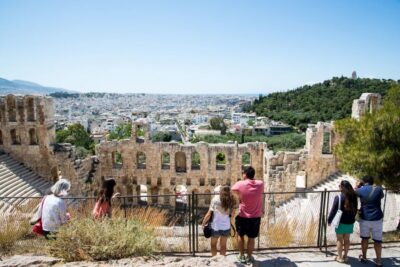
Acropolis, Parthenon & Acropolis Museum Guided Tour
Read our review →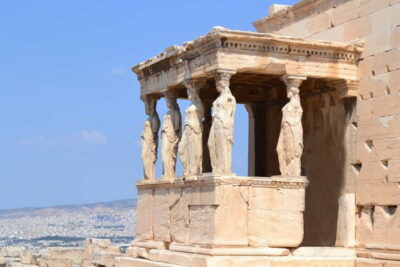

Acropolis monuments & Parthenon Walking Tour with Optional Acropolis Museum
Read our review →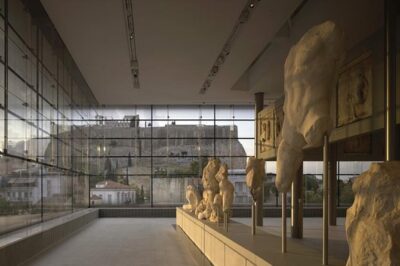
Athens All Included: Acropolis and Museum Guided Tour with Ticket
Read our review →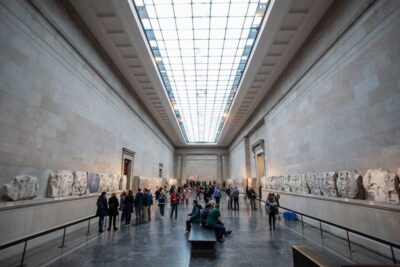
Acropolis Museum Ticket with optional Audio Guide
Read our review →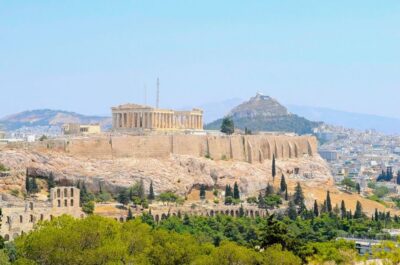
Acropolis Ticket & Optional Self-Guided Audio Tours
Read our review →Browse the lists this tour appears in