
Reviewed · WALKING TOURS
Athens Social and Political Walk
Athens has more to explain than its ancient stones. This 2.5-hour political walk connects government buildings, street-level history, and modern Greek life, guided by political scientist Isaac. You move from the Prime Minister’s office and Parliament toward Athens Polytechnic, following the country’s path from independence through dictatorship, democratic reform, and recent crisis.
I like the clear route and the chance to ask real questions instead of listening to a fixed script. I also like Isaac’s use of current events and comparisons with other countries, which can make difficult political ideas easier to grasp. The tradeoff is simple: this is a niche experience, and visitors who want ruins, museum interiors, or classic sightseeing may find its subject matter too focused.
Key points at a glance

- A political reading of central Athens: Government buildings become markers in Greece’s modern story.
- Isaac leads the walk: Expect a political scientist’s perspective, historical context, and recent news examples.
- Five meaningful stops: The route includes the Prime Minister’s seat, Presidential residence, Parliament, Old Parliament House, and Athens Polytechnic.
- A small group matters: The maximum of 15 people leaves room for questions and discussion.
- A focused English tour: The experience lasts about two and a half hours and requires moderate physical fitness.
- A useful first-days-in-Athens choice: It can help you understand the country beyond the usual ancient sights.
Why this Athens walk feels different
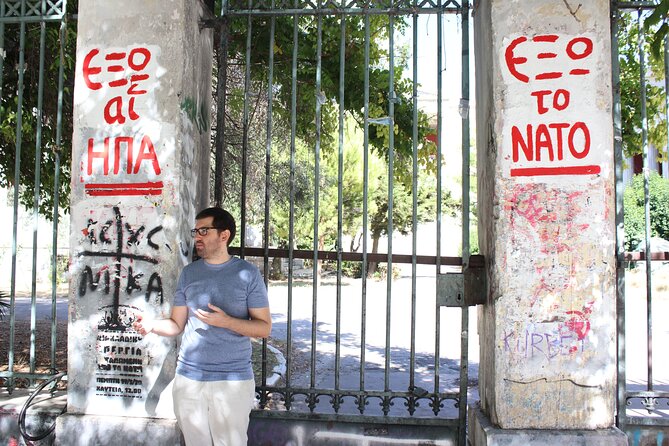
Many Athens walks point toward monuments and tell you what happened long ago. This one asks a different question: how did Greece become the country you see today?
That means the subject reaches from the Greek War of Independence to modern democracy, from the military Junta to social division, and from economic crisis to current political debates. Isaac’s role is important here. He is described as a political scientist and brings a structured account rather than a loose collection of anecdotes.
I like that balance. You do not need a degree in politics, and you do not need to agree with every interpretation to follow the discussion. The walk is designed to give you a working framework. Later, when you see a headline about Greece, you should have more context for the arguments behind it.
The route also gives the discussion a physical shape. You are not sitting in a classroom hearing dates in isolation. You are walking between the institutions that hold power, remember power, and sometimes symbolize resistance to it.
A few more things to do in Athens worth a look
- Athens: Acropolis and Parthenon Guided Walking Tour
★ 4.6 · 5,882 reviews - Greek Food Walking Tour in Athens
★ 5.0 · 4,740 reviews - Acropolis: Acropolis and Parthenon Guided Walking Tour
★ 4.7 · 3,442 reviews
Starting at the Prime Minister’s office
The meeting point is at Leoforos Vasilissis Sofias 2-4, in central Athens. The first listed stop is the official seat of the Prime Minister of Greece.
That is a smart place to begin. The building provides a natural entry into the workings of the modern state, while Isaac can use it to explain how political authority developed and how government functions within Greece’s system.
Do not expect a tour of the interior. The value here is the setting and the conversation around it. You are looking at the seat of executive power while discussing the forces that shaped modern Greek politics.
This opening should suit you if you like to place current events in a physical setting. It also sets the tone for the rest of the walk: less postcard sightseeing, more interpretation.
The Presidential residence and the shape of the Greek state
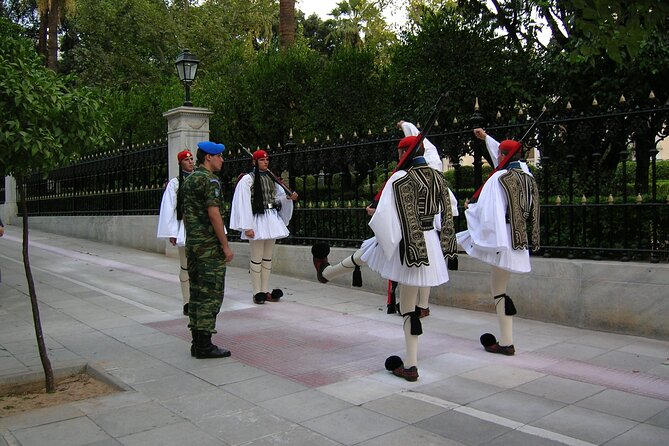
The next stop is the official residence of the President of the Hellenic Republic. Alongside the Prime Minister’s office, it helps clarify the difference between major political institutions.
For many visitors, the titles and roles in a foreign political system can blur together. A guide who works in political science can explain why these offices matter and how Greece’s state structure relates to its political history.
This is one of the useful features of the experience. You are not simply being shown an impressive address. You are being given a way to read the building’s importance.
The wider discussion may also touch on Greek society and political polarization. Isaac’s perspective as someone living in Greece but not Greek was specifically valued for bringing an outside yet locally grounded view. That can be useful when a country’s political arguments seem hard to decode from headlines alone.
Parliament and the visible center of politics

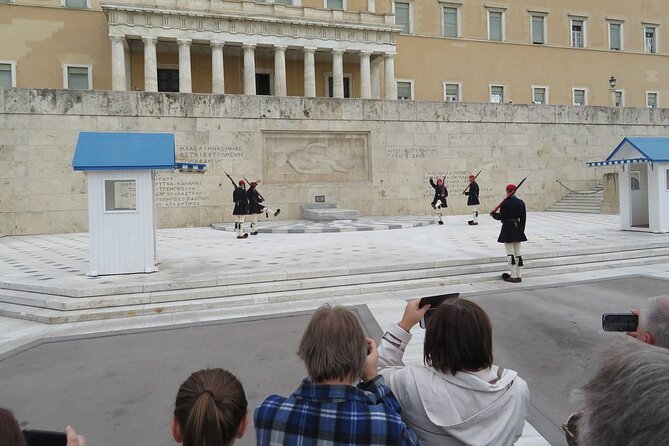
The Greek Parliament is one of the clearest anchors on the route. Here, the conversation can connect institutions with the country’s modern political development.
The walk’s story reportedly reaches from the independence war through later political change, the military Junta, the return to democracy, and the difficult years leading into the recent economic crisis. Parliament gives that story a concrete center.
You should expect explanation rather than ceremony. There is no indication that the experience includes entry inside the building, and you should plan on understanding it from outside. That is not a major problem for this kind of tour. The point is how Parliament fits into the larger political story.
I especially like the opportunity to ask questions here. You can bring up a current issue, ask how a historical event still affects society, or compare Greece with your own country. The small-group format makes that kind of exchange more realistic than it would be on a large group outing.
Same base, a completely different day:
- Athens: Acropolis & up to 5 Archaeological Sites Combo Pass
★ 4.4 · 12,619 reviews - Athens: Acropolis Ticket with Optional Audio or Live Guide
★ 4.2 · 11,055 reviews - Athens: Acropolis, Parthenon & Acropolis Museum Guided Tour
★ 4.8 · 9,316 reviews - Athens: Cape Sounion & Poseidon Temple Sunset Half-Day Trip
★ 4.8 · 8,241 reviews
Old Parliament House and the early modern story
Old Parliament House adds an important historical layer. It shifts the focus from the current government to the earlier development of the Greek state.
This is where the walk can help you connect independence, institution building, and the problems of a young modern country. The route does not treat history as a separate subject, then switch to politics. Instead, it follows the links between the two.
That approach is useful because modern Greek politics did not appear out of nowhere. Early decisions, changes in power, social tensions, and later upheavals all help explain the arguments you hear today.
If you have already read about Greece, you may appreciate Isaac’s synthesis. If you know little about the country beyond ancient Athens, the discussion should still give you a workable outline. The amount of information may feel brisk, though. Two and a half hours is enough for a strong overview, not a full course in Greek history.
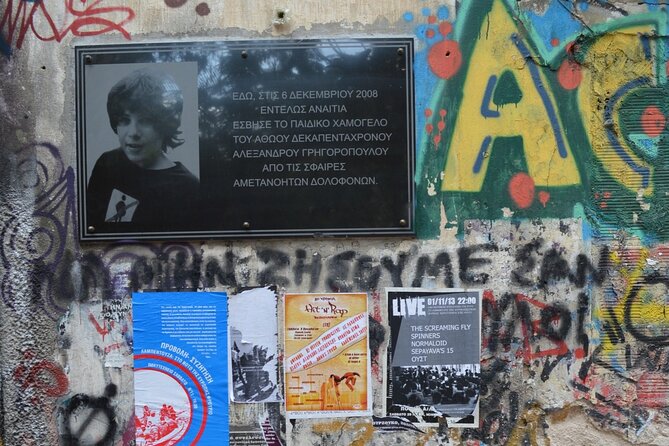
Athens Polytechnic and the memory of November 17, 1973

The walk ends at the main entrance of the National Technical University of Athens, often called Athens Polytechnic, on Patision Avenue.
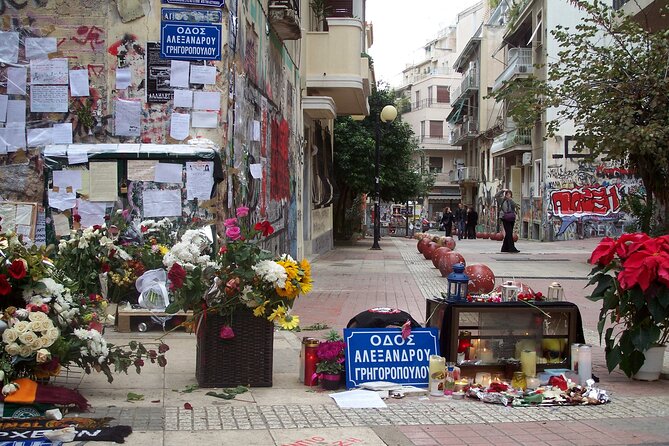
This is more than a convenient endpoint. The university is closely tied to the Athens Polytechnic uprising of November 17, 1973, one of the most important events in the institution’s history. The uprising has a central place in the story of resistance to the military Junta and Greece’s movement toward democratic reform.
Ending here gives the walk a strong final chapter. You have moved from the current centers of state power to a place associated with protest, memory, and political change.
The final stop also shows why this is not a standard city orientation walk. Athens Polytechnic is being used as a key to understanding modern Greece, not simply as another building on a route. If political history interests you, this may be the most memorable part of the experience.
The endpoint is the university’s main entrance, not the starting point. You should be comfortable arranging your onward plans from Patision Avenue.
Isaac’s teaching style and the value of questions
The guide can make or break a politics tour. Here, Isaac is repeatedly described as passionate, engaging, pleasant, and well prepared. More important, his approach seems to combine a clear historical thread with examples from recent news.
That combination gives the walk some life. A list of dates would be dry. Current anecdotes can show how older disputes still affect public debate, the economy, and social relations.
Isaac also uses comparisons with other countries. This matters because Greek political terms and events can be difficult to place if you do not know the local background. A comparison with your own political system may give you a quick reference point, while still leaving room for the differences that make Greece distinct.
I would come with questions. The experience is built around discussion, and the small group has a maximum of 15 people. You should not expect a private tour, but the group is limited enough to make direct questions more practical.
One fair caution: political interpretation is not the same as a neutral list of facts. Isaac’s perspective is part of the value, but you should listen actively and treat the walk as an informed introduction rather than the final word on every issue.
Price, timing, and what you receive for $47.92
At $47.92 per person, this costs more than a basic free walk but less than many private specialist experiences. The value depends on your interests.
For someone seeking only famous sights, the price may feel high because the tour does not advertise museum admission, interior visits, meals, or transport. You are paying for a focused two-and-a-half-hour explanation led by a specialist, along with the chance to ask questions in a small group.
That is a fair exchange if you want context. The walk covers a difficult subject in a compact period and links several important institutions. It can also save you from piecing together modern Greek politics from scattered articles and guidebook paragraphs.
The experience is offered in English and is usually booked about 14 days ahead. That advance demand suggests you should not leave it until the last minute if the timing matters to you.
Wear comfortable shoes and allow enough energy for a walking route lasting about 150 minutes. A moderate level of physical fitness is required. The activity is near public transportation, and service animals are allowed.
Who should book this experience
I would recommend it most strongly to you if you:
- Want to understand Greece beyond ancient monuments
- Follow history, government, economics, or current affairs
- Prefer discussion and explanation over quick photo stops
- Like asking questions in a small group
- Are visiting Athens early in your stay and want context for what you see afterward
- Enjoy hearing a local perspective that is not limited to a traditional Greek national narrative
It can also work well for visitors who already know some Greek history. Isaac’s broad account may help connect separate events into one political story.
I would be more cautious if you want a relaxed stroll with little talking, a family activity built around visual attractions, or a tour centered on classical Athens. The route has important buildings, but its real subject is modern political life.
Practical details before you go
The walk begins at Leoforos Vasilissis Sofias 2-4 and finishes at the main entrance of the National Technical University of Athens on Patision Avenue. Since the start and end are different, check your plans for afterward rather than assuming you will return to the first meeting point.
You receive confirmation when booking, and the tour operates in English. The group can include up to 15 people, which is a useful middle ground between a private guide and a large crowd.
Free cancellation is available up to 24 hours before the start time. Changes or cancellations made less than 24 hours ahead are not accepted for a refund. The walk requires good weather and a minimum number of participants, so a cancellation by the operator can lead to another date, another experience, or a full refund.
Should you book the Athens Social and Political Walk?
Book it if you want the modern story of Athens, not just its ancient one. The route is well chosen, Isaac brings a specialist’s political perspective, and the small group gives the experience room for genuine questions.
The strongest reasons to go are the connection between history and current events, the stop at Athens Polytechnic, and the chance to understand Greek politics through real places. The main reason to skip it is equally clear: this is a focused politics seminar on foot, not a general sightseeing tour.
For the right reader, $47.92 is a sensible price for a compact, thoughtful introduction to Greece’s political past and present. I would place it early in an Athens visit, especially if you want the rest of the city to make more sense.
FAQ
How long does the Athens Social and Political Walk last?
The walk lasts approximately 2 hours and 30 minutes.
Where does the tour begin?
It begins at Leoforos Vasilissis Sofias 2-4, Athens 106 74, Greece.
Where does the tour end?
It ends at the main entrance of the National Technical University of Athens, also called Athens Polytechnic, on Patision Avenue.
Is the tour offered in English?
Yes. The experience is offered in English.
How many people can join the tour?
The group has a maximum of 15 participants.
What places are included on the route?
The route includes the official seat of the Prime Minister of Greece, the official residence of the President of the Hellenic Republic, the Greek Parliament, Old Parliament House, and the National Technical University of Athens.
Is the walk suitable for every fitness level?
Participants should have a moderate level of physical fitness because the experience is a walking tour lasting about two and a half hours.
Can I cancel for a full refund?
Yes, if you cancel at least 24 hours before the experience starts. Cancellations made less than 24 hours before the start time are not refunded.
Just added in Athens
- Ceramic and Pottery Creative Workshop with Two Local Artists★ 4.0 · 57 reviews
- Small-Group Women History in Ancient Greece Walking Tour★ 5.0 · 38 reviews
- Athens Old City Private Photoshoot Tour / 2 hrs★ 5.0 · 109 reviews
- Athens: Wine Workshop Create your Own Wine under the Acropolis★ 5.0 · 77 reviews
- Athens: Greek Wines Tasting with Sommelier and Acropolis Views★ 5.0 · 88 reviews
- Wine Trails Private Tour/ Nemea visit 3 wineries from Athens or Nafplion (10 h)★ 5.0 · 44 reviews
- Hydra Private Day Trip by Ferry from Athens with Transfers★ 4.0 · 30 reviews
- FLYING DRESS Photoshoot in Athens – Greece★ 5.0 · 47 reviews
Walking Tours, compared.

Acropolis monuments & Parthenon Walking Tour with Optional Acropolis Museum
Read our review →
Knossos: Knossos Palace Skip-the-Line Guided Walking Tour
Read our review →

Athens Authentic Greek Food Walking Tour (Small Group)
Read our review →
Early Morning Acropolis & Old Athens Guided Walking Tour
Read our review →
Browse the lists this tour appears in