
Reviewed · WALKING TOURS
Discover Local Hidden Gems in 2 Hours Walking Tour in Athens
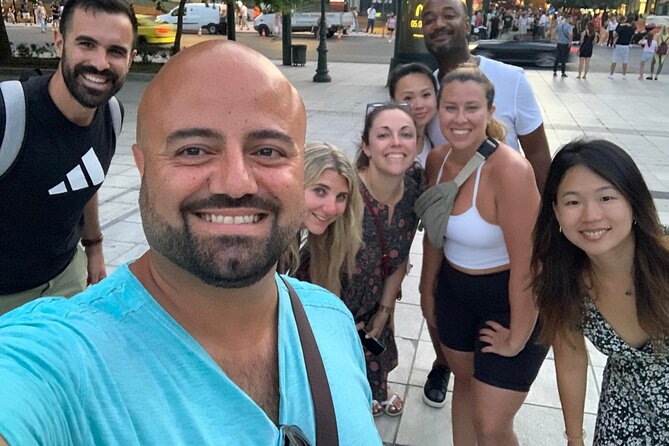
Athens reveals itself quickly on this compact walk. In two hours, you move from Acropolis views and ancient marketplaces to the Presidential Guard, Plaka lanes, and the modern pulse of Monastiraki. The useful trick is that the tour is not just a checklist of monuments. It helps you understand how the old city fits together.
I like the small group limit of 10, which gives you room to ask George or Dimitris questions without shouting over a crowd. I also like the practical recommendations for food, shopping, sightseeing, and later activities. Those tips can save you from spending the rest of your stay guessing where to eat.
The main drawback is the pace. You stop at many places, but most are short visits or exterior looks. If you want to enter the Acropolis, Ancient Agora, Roman Agora, or churches, you will need separate tickets and time.
Key points to know before you book
- A fast Athens orientation: The route connects major central sights so you can get your bearings on your first day.
- Acropolis views from street level: You see the Acropolis and Parthenon from several angles, with background on what you are looking at.
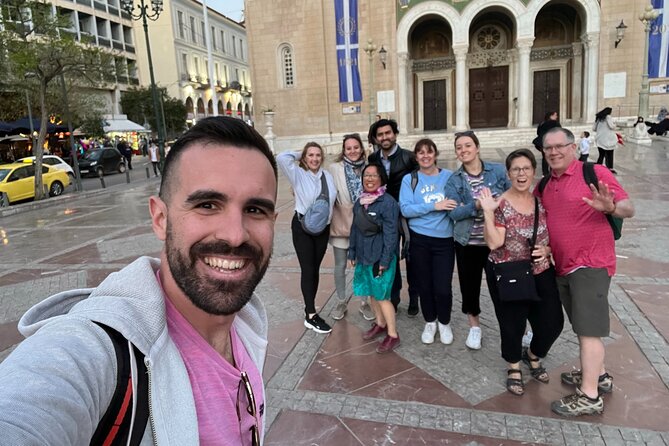
- A real small-group format: The maximum is 10 people, making questions and conversation easier.
- History with practical help: George and Dimitris mix ancient stories with tips on food, shopping, and getting around.
- A stop at the changing of the guard: You watch the ceremony and hear about the guards’ training, daily life, and symbols.
- A useful ending point: The walk finishes at Monastiraki Square, in front of the train station, close to food, markets, and public transport.
Why this two-hour walk works well in Athens
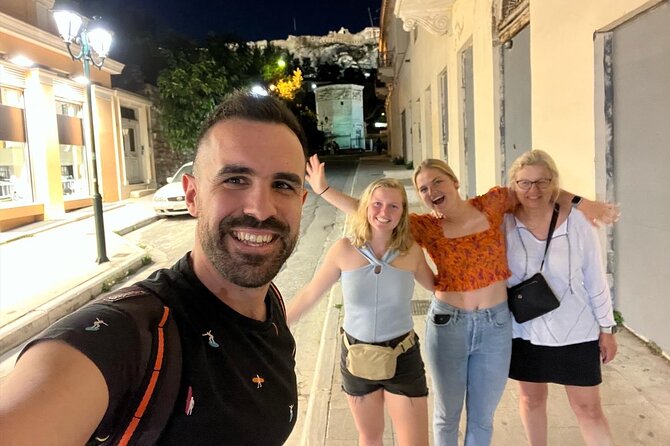
Athens can feel confusing at first. The Acropolis rises above the center, but the best routes between ancient ruins, shopping streets, squares, and residential lanes are not always obvious. This walk gives you a working map of the center without asking you to spend half a day inside one museum.
At $36.04 per person, the value rests on the guide rather than on admission tickets. Every listed stop is free to view from the route, so you are paying for orientation, stories, photo locations, and local suggestions. That is a fair deal if you want a helpful introduction. It is less useful if you expect a full archaeological tour with several interior visits.
The tour is offered in English and uses a mobile ticket. You meet at Adrianou 1, near the historic center, and finish at Monastiraki Square. Since the walk stays in central Athens and passes near public transportation, it is easy to fit into your first afternoon or evening.
I would book it early if the timing suits you. It is often reserved about 32 days ahead, and the small group size limits the number of spaces. The overall rating is 4.9, with 98 percent of customers recommending it, though one canceled departure points to the need for a backup plan when the weather is uncertain.
A few more things to do in Athens worth a look
- Athens: Acropolis and Parthenon Guided Walking Tour
★ 4.6 · 5,882 reviews - Greek Food Walking Tour in Athens
★ 5.0 · 4,740 reviews - Acropolis: Acropolis and Parthenon Guided Walking Tour
★ 4.7 · 3,442 reviews
Acropolis and Parthenon views without entering the site
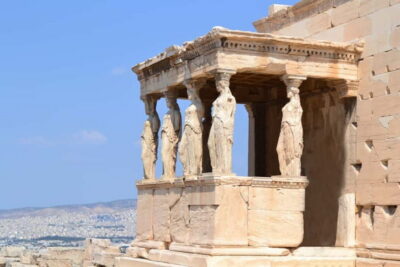
The walk begins with views of the Acropolis from different points in the city center. This is a smart way to start because you see the monument in relation to the streets and neighborhoods below it, rather than only from inside the archaeological site.
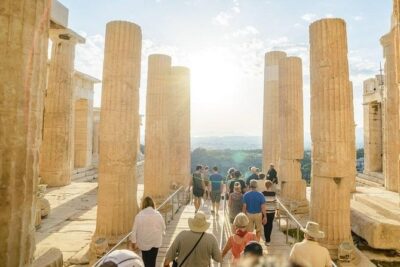
You also stop for close views and photographs of the Parthenon. George or Dimitris provides the historical setting, so the ruins become more than a famous shape on a hill. You can ask questions while looking directly at the buildings, which helps connect the explanation to what you see.
Keep your expectations clear: this is an exterior viewing experience. The tour does not include Acropolis entry, and two hours is not enough for a detailed visit to the hilltop complex. I would use this walk to decide how much time you want to spend at the Acropolis later, then return with a timed admission ticket if the site is a priority.
Thiseio gives you an early feel for old Athens
Thiseio is one of the oldest neighborhoods in the historic center. The stop is brief, about five minutes, but its location helps you understand the character of central Athens before the route moves toward the major squares.
This is not a long neighborhood stroll with time to browse every café. Think of it as a quick introduction and a chance to see one of the city’s older quarters from street level. The short timing keeps the tour moving, but anyone hoping for a slow coffee stop will need to return on their own.
Monastiraki connects food, markets, and daily life
Monastiraki Square is one of the key meeting points in central Athens. The area is lined with bars, restaurants, cafés, and open-air flea markets, so it is a useful place to learn where the city keeps moving after the monuments close.
The guide passes through rather than setting aside a long shopping period. That is useful on an orientation walk because you can mark places for later. The tour ends here as well, in front of the train station, so you can return easily for a meal, market browsing, or onward transport.
I especially like this arrangement for a first day. By the time the walk ends, you know where Monastiraki is and have a short list of things to explore later. The area can be busy, so keep your belongings secure and do not expect a quiet square.
Same base, a completely different day:
- Athens: Acropolis & up to 5 Archaeological Sites Combo Pass
★ 4.4 · 12,619 reviews - Athens: Acropolis Ticket with Optional Audio or Live Guide
★ 4.2 · 11,055 reviews - Athens: Acropolis, Parthenon & Acropolis Museum Guided Tour
★ 4.8 · 9,316 reviews - Athens: Cape Sounion & Poseidon Temple Sunset Half-Day Trip
★ 4.8 · 8,241 reviews
Ancient Agora and Roman Agora, two different chapters
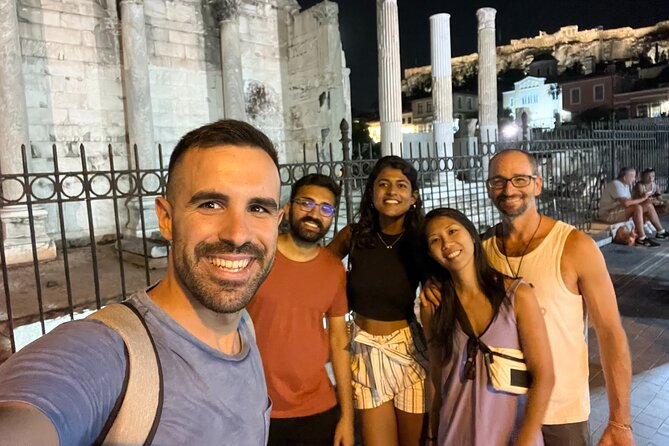
The route passes the Ancient Agora, described as the oldest open marketplace of the ancient city. Here, the guide discusses ancient Athens and explains how the old city worked. The visit is about five minutes, so you receive context rather than a full archaeological examination.
The Roman Agora follows with another short stop. This shifts the story from classical Athens to the Roman period in Greece. Seeing both sites in sequence is valuable because it shows that Athens was not frozen in one famous era. The city continued to change under different rulers and political systems.
Again, these are pass-by stops. Admission is not included, and you should not book this walk expecting time inside either site. If ancient history is your main reason for coming to Athens, use the guide’s explanation as a primer, then schedule a separate visit when you can give the ruins proper attention.
The changing of the guard at Parliament
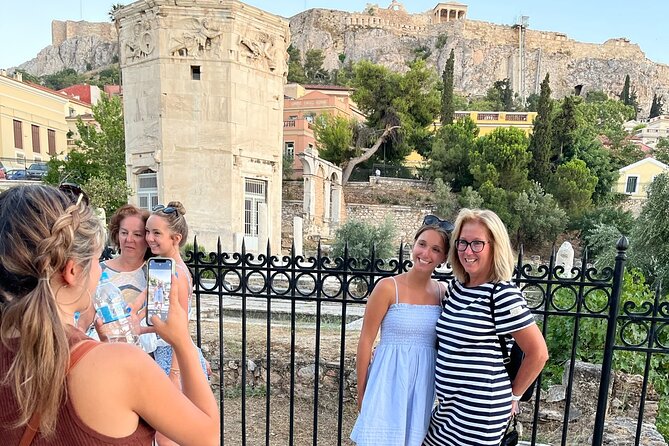
The 10-minute stop at the Hellenic Parliament includes the changing of the Presidential Guard. This is one of the most distinctive public ceremonies in central Athens, and the guide explains the guards’ training, daily life, and the meaning behind their duties.
The timing matters here. A ceremony is not something you can experience in the same way from a book or a quick photograph. You watch it happen, then hear the background while the details are fresh in your mind.
The Parliament itself is also part of the discussion. The guide explains the history of this 18th-century building and talks about politics and life in Athens. That gives the stop a modern side, balancing the ancient ruins earlier in the walk.
You should still confirm the exact departure time when booking if seeing the full ceremony is important to you. The tour promises a live changing of the guard, but public ceremonies can depend on timing and official schedules.
Syntagma Square and the city’s public heart
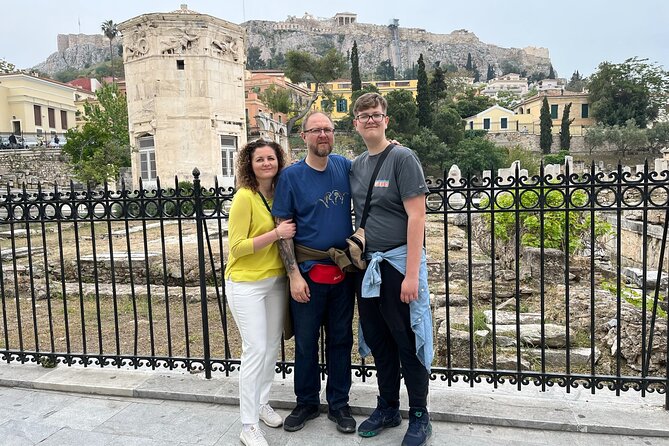
Syntagma Square, in front of Parliament, is Athens’ largest square and a place for fountains, events, and public activity. The stop lasts about five minutes, so you get the setting and the explanation without lingering for a long time.
I find this useful because it makes Athens feel like a living capital, not simply an outdoor museum. The route has already covered ancient markets and classical monuments. At Syntagma, you see where modern civic life gathers.
The square is also practical for orientation. It is one of the easiest places to use as a reference point when you are planning independent walks later. The guide’s advice about additional activities can help you decide what belongs on your schedule.
Plaka, the city’s most atmospheric neighborhood
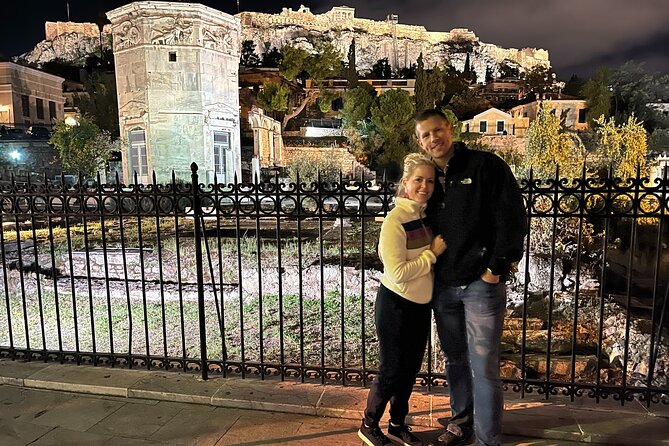
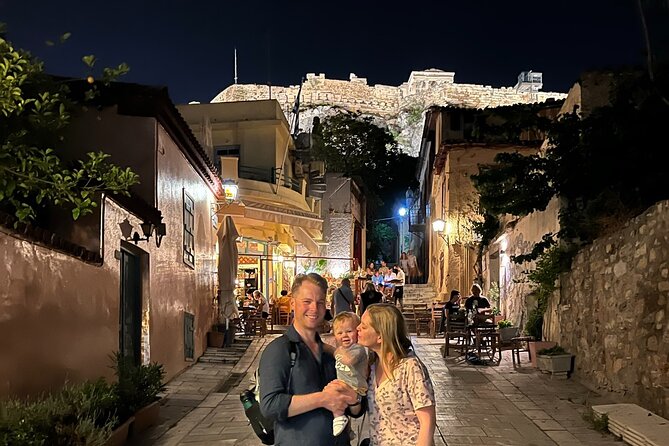
Plaka is the longest neighborhood stop, at about 10 minutes, and the tour focuses on its lanes and photo spots. It is described as looking like a small island in the heart of Athens, an apt way to explain the contrast between its intimate streets and the broad central avenues nearby.
This is where the tour’s local angle is most apparent. The guide points out quieter corners that are easy to miss when you simply walk from Syntagma to the Acropolis. You also hear where to return for photographs, food, or a slower wander.
Do not mistake 10 minutes for a full exploration of Plaka. The area deserves more time, especially if you want to browse shops or sit at a restaurant. The advantage of seeing it with a guide is that you can return with a better sense of direction instead of wandering without a plan.
The cathedral, flea market, and Plaka stairs
The Holy Metropolitan Church of the Annunciation to the Virgin Mary is a brief pass-by stop. The guide discusses its exterior and interior design, though this route does not promise a long interior visit. Its architecture adds another layer to the city’s story, between ancient remains and modern streets.
The Athens flea market is another short stop, aimed at shopping, souvenirs, and local atmosphere. You will not have much time to bargain or browse during the walk, but you can note the area and come back after the tour ends. Since the route finishes at Monastiraki, returning to the market is simple.
The final Plaka stop is the famous staircase area, a meeting point lined with restaurants, bars, and rooftop terraces. This is a strong place to finish the neighborhood portion of the walk because it gives you immediate ideas for an evening. The guide can also point you toward places to consider later, though the included material promises recommendations rather than meals or discounts.
What the guide adds beyond a map
A map can show you that the Acropolis, Parliament, Plaka, and Monastiraki are close together. It cannot explain how to link them in a sensible walk or help you decide where to return. That is the real value of this experience.
George receives especially strong praise in the supplied comments for giving a clear introduction, offering useful recommendations, and helping people feel more confident navigating Athens afterward. Dimitris is also described as engaging and good at balancing history, local culture, and practical advice.
The food suggestions are worth taking seriously. One comment specifically highlights the meal recommendations and says the food choices were excellent. Since the tour includes a list of tips for food, shopping, sightseeing, and other activities, I would keep your phone ready to save names and locations as you walk.
Communication before the tour has also been praised, although one canceled booking created a serious concern. The provider explains that the cancellation was due to weather and that safety comes first. If your schedule is tight, especially around an arrival or departure day, leave some flexibility.
Pace, group size, and physical demands
The walk lasts about two hours and includes many short stops. It is described as an easy walk, but you are still moving through historic central streets, squares, and neighborhood lanes. Comfortable shoes are sensible, and you should expect the guide to keep the group moving rather than pause for long breaks.
A maximum of 10 people is one of the tour’s strongest practical features. A small group makes it easier to hear explanations, ask about restaurants, and stop for photographs without creating a large street crowd.
Most people can participate, and service animals are allowed. The tour is near public transportation, which helps if you are arriving from another part of Athens. It is not designed as a deep archaeological visit or a long food tour. It is a guided city orientation with history and local advice.
Who should book this Athens walk?
I would choose this for a first visit, particularly if you want help getting oriented soon after arrival. One useful approach is to book it on your first day, then use the recommendations and route knowledge for the rest of your stay. A two-hour walk can also help you stay awake after a long flight without demanding an entire afternoon.
It suits couples, solo visitors, families with older children, and anyone who prefers conversation over a large group lecture. The English-language format and small maximum make it easy to ask about subjects that interest you, from ancient Athens to current food options.
I would not choose it as your only history experience if you want detailed time inside the Acropolis or Agora. The many five-minute stops are designed to give you a broad view, not a scholarly examination. Pair it with independent visits to the sites that matter most to you.
You can cancel free for a full refund up to 24 hours before the start time. Cancellations or changes inside 24 hours are not refunded, and poor weather or failure to meet the minimum group size can lead to a different date or full refund.
Should you book it?
Book this walk if you want a friendly, efficient introduction to central Athens with useful advice for the days that follow. Its best features are the small group, the range of neighborhoods, the guard ceremony, and the chance to hear food and sightseeing suggestions from George or Dimitris.
Skip it if you want extensive time at each archaeological site or prefer to explore without a fixed pace. For most first-time visitors, though, $36.04 is a reasonable price for two hours of orientation, especially when you use the route to plan the rest of your Athens stay.
FAQ
How long does the Athens walking tour last?
The tour lasts approximately two hours.
Where does the tour start?
It starts at Adrianou 1, Athina 105 55, Greece.
Where does the tour finish?
It ends at Monastiraki Square, in front of the train station.
How many people can join the tour?
The maximum group size is 10 people.
Is the changing of the guard included?
Yes. The route includes a live changing of the guard ceremony and information about the guards’ training, daily life, and duties.
Can I cancel for a full refund?
Yes. You can cancel at least 24 hours before the experience start time for a full refund. Cancellations or changes made less than 24 hours before the start time are not refunded.
Just added in Athens
- Ceramic and Pottery Creative Workshop with Two Local Artists★ 4.0 · 57 reviews
- Small-Group Women History in Ancient Greece Walking Tour★ 5.0 · 38 reviews
- Athens Old City Private Photoshoot Tour / 2 hrs★ 5.0 · 109 reviews
- Athens: Wine Workshop Create your Own Wine under the Acropolis★ 5.0 · 77 reviews
- Athens: Greek Wines Tasting with Sommelier and Acropolis Views★ 5.0 · 88 reviews
- Wine Trails Private Tour/ Nemea visit 3 wineries from Athens or Nafplion (10 h)★ 5.0 · 44 reviews
- FLYING DRESS Photoshoot in Athens – Greece★ 5.0 · 47 reviews
- Small-Group Wine Tour in Athens with Tasting★ 5.0 · 33 reviews
Walking Tours, compared.

Acropolis monuments & Parthenon Walking Tour with Optional Acropolis Museum
Read our review →
Knossos: Knossos Palace Skip-the-Line Guided Walking Tour
Read our review →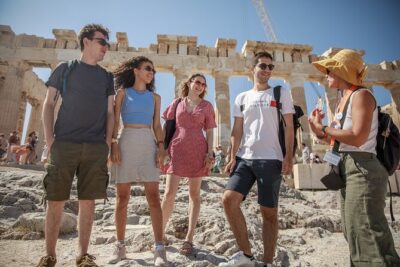

Athens Authentic Greek Food Walking Tour (Small Group)
Read our review →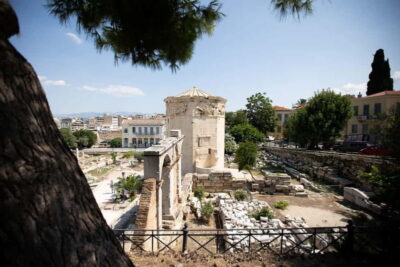
Early Morning Acropolis & Old Athens Guided Walking Tour
Read our review →
Browse the lists this tour appears in