
Reviewed · ACROPOLIS & ATHENS HIGHLIGHTS
Acropolis and Acropolis Museum (Small Group Afternoon Walking Tour)
The smartest part of this Athens tour is its order: you see the Acropolis Museum first, then climb to the ancient citadel with the sculptures and stories fresh in your mind. By late afternoon, the heat and crowds may have eased, and the light over Athens can be lovely. Guides including Nikos, Nicholas, and Nic are noted for patient explanations and careful pacing.
I like the small-group limit of 10 and the way the museum gives the Acropolis context instead of leaving you to guess what you are seeing. I also like the afternoon start, which can mean cooler walking and excellent city views. The catch is cost: the $61.47 tour price does not include the €50 in cash for entrance tickets, though people under 18 enter free with identification.
Key points to know before you book
- Museum first, monuments second: The sculptures and models help you understand the Acropolis before you reach the summit.
- Afternoon timing: The 4:00 pm start may bring softer light, a breeze, and less heat than a morning visit.
- Small group format: The maximum is 10 people, with some departures operating like a private tour.
- Two separate entrance fees: Bring €50 in cash per adult, €30 for the Acropolis and €20 for the museum.
- Moderate walking required: Expect marble surfaces, uphill paths, steps, and roughly 3 hours and 15 minutes overall.
- Strong guide focus: The best part of the experience is the explanation, with guides such as Nikos and Nicholas adding detail, photos, and flexible pacing.
Why start at the Acropolis Museum?

This tour begins at 4:00 pm at Makrigianni 4, close to the Acropolis Museum. You meet your licensed guide and first look at the remains of an ancient Athenian neighborhood below the museum. It is a useful opening because you see that modern Athens is built directly over layers of older city life.
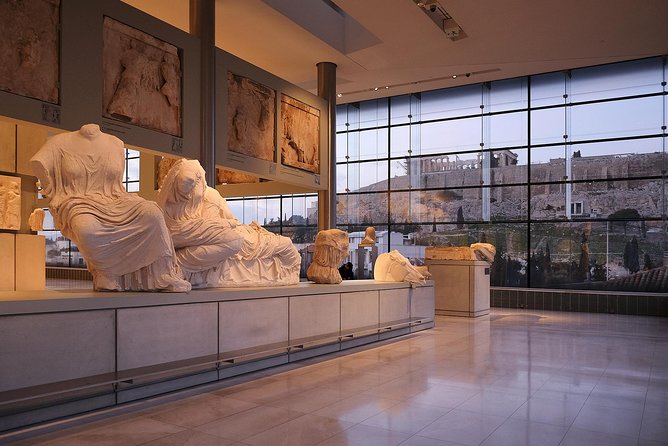
Inside, the first rooms use models of ancient Athens and the Acropolis to give you a basic map of the site. I like this approach. The Acropolis can feel like a pile of grand names and broken columns if you arrive without context. A guide can connect the museum objects to the buildings you will see later.
The museum visit lasts about 1 hour and 30 minutes. Admission is not included in the tour price, and you buy the €20 museum ticket in cash from the guide. The guide also handles the entry process as part of the group’s skip-the-line service.
You then see important finds from the slopes of the Acropolis. These pieces help explain that the hill was not only a platform for the Parthenon. It was a sacred center with shrines, monuments, theaters, statues, and daily activity around its base.
More of the old city on foot in Athens:
- Athens: Acropolis & up to 5 Archaeological Sites Combo Pass
★ 4.4 · 12,619 reviews - Athens: Acropolis Ticket with Optional Audio or Live Guide
★ 4.2 · 11,055 reviews - Athens: Acropolis, Parthenon & Acropolis Museum Guided Tour
★ 4.8 · 9,316 reviews
Sculptures, color, and the first Parthenon

One especially useful stop is the group of sculptures from the first Parthenon, built in the 6th century BC. The guide points out traces of color still visible on some pieces. That detail can change your mental picture of Greek temples. Ancient sculpture was not always the plain white marble image seen in modern museums and textbooks.
The archaic statues are another highlight. You see figures that once decorated the top of the Acropolis, including the famous calf-bearer and the Kritios Boy. These works show the move from stiff early forms toward more natural poses and expression.
The Caryatids are among the museum’s most memorable sights. These sculpted maidens once supported the porch of the Erechtheion on the Acropolis. Seeing them indoors lets you study their clothing, posture, and carved details more closely than you can from the hill.
The museum also helps you understand what is original, what has been damaged, and what has been moved for protection. That matters at the Acropolis, where distance, barriers, glare, and crowds can make small details hard to see.
The Parthenon Gallery makes the site easier to read
The final museum stop is the third-floor Parthenon Gallery. Its arrangement follows the shape and proportions of the Parthenon, placing the sculptures in a setting that helps you connect them to the temple.
Your guide explains the gallery’s layout, the myths shown in the sculpture, and the ideas behind the decoration. This is where the tour’s order pays off. When you later reach the Parthenon, you have already encountered its sculptural program and can look at the building with a clearer sense of purpose.
The museum itself is also an important part of the experience. Its modern design, broad views, and open galleries make a good contrast with the weathered stones outside. If you only want quick photographs of the Acropolis, this first half may feel slow. If you want to understand what you are looking at, it is time well spent.
Walking up the south slope
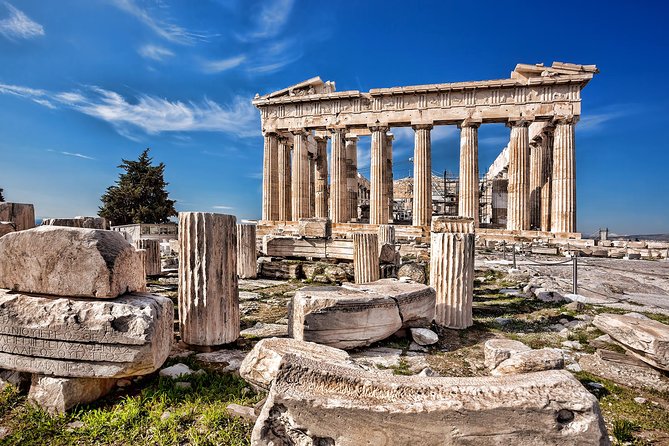
After the museum, you walk toward the south slope of the Acropolis. The second part lasts about 1 hour and 45 minutes. The route includes uneven paths, marble surfaces, uphill walking, and time at several ancient sites before reaching the summit.
The first major stop is the Theater of Dionysus, one of the oldest theaters in Greece. It sits on the southern slope and helps place the Acropolis within the wider religious and civic life of ancient Athens. The guide then points out the nearby Sanctuary of Asclepius, dedicated to the god of medicine.
These stops add depth to the visit. The Acropolis is not only the Parthenon. It is a whole hillside of sacred buildings and public spaces, each connected to a different part of ancient Athenian life.
You also see the Odeon of Herodes, a Roman-era theater still used for concerts. The tour includes a view of this large semicircular structure, as well as the funeral monument of Philopappus. These sights help you read the surrounding hills and ruins as one connected setting.
A few more things to do in Athens worth a look
- Athens: Mythology of Delphi, Museum and Arachova Guided Tour
★ 4.6 · 4,008 reviews - Athens: Acropolis, Parthenon & Acropolis Museum Guided Tour
★ 4.8 · 3,579 reviews - Acropolis monuments & Parthenon Walking Tour with Optional Acropolis Museum
★ 5.0 · 2,678 reviews - Athens All Included: Acropolis and Museum Guided Tour with Ticket
★ 4.5 · 2,673 reviews
The final climb to the Parthenon
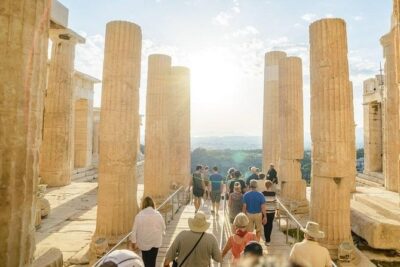
As you go higher, the path leads toward the Propylaea, the monumental gateway of the Acropolis. You then pass the Temple of Athena Nike, a small and elegant temple dedicated to Athena in her role as goddess of victory.
The Temple of Athena Nike is an excellent photo stop. Its size is modest beside the Parthenon, but its position at the entrance gave it a strong visual role. Your guide can point out how the approach to the Acropolis was designed to build a sense of arrival.
At Mars Hill, also called the Areopagus, you get a broad view and hear about St. Paul’s speech concerning the unknown God. The rock is outside the main summit area, but it adds a later layer to the ancient setting.
Finally, you enter through the Propylaea and reach the top. The Parthenon is the main event, but do not rush past the Erechtheion. Its unusual design and the famous Caryatid porch make it one of the most distinctive buildings on the hill.
You get time for photographs and for looking around rather than being hurried from one explanation to the next. Several guides, including Nikos, have been praised for taking photos and allowing extra time when the group wanted to absorb the view.
What the afternoon timing changes
The tour begins at 4:00 pm, making it a good choice if you prefer not to face the Acropolis at the hottest part of the day. The afternoon can bring lower temperatures, a breeze, and softer light for city views.
This is not a promise of empty paths. The Acropolis remains one of Athens’ busiest sights, and conditions can vary by date. Still, the afternoon timing gives you a reasonable chance of a more comfortable visit than an early afternoon climb in full sun.
The late light is especially useful for photographs of Athens, the surrounding hills, and the monuments. If photography matters to you, the timing is one of this tour’s strongest features.
The tradeoff is that the tour finishes later in the day. You should also allow flexibility around the listed duration of about 3 hours and 15 minutes. The museum is scheduled for 1 hour and 30 minutes, and the Acropolis visit for 1 hour and 45 minutes, not counting the short walk between them.
Small group size and guide quality
The group limit is 10 people, which is much easier to manage than a large coach group. You should be able to hear the guide more clearly, ask questions, and stay close during the walking portions.
Some departures have ended up with only a family, a couple, or a very small group. That can make the tour feel nearly private, but you should treat that as a possibility rather than a guarantee.
The guides are the main reason to book a guided visit instead of walking through the sites alone. Nikos, Nicholas, and Nic are names associated with the experience, and the guide may vary by departure. The strongest qualities to look for are clear explanations, patience, and practical care on the route.
Guides have adjusted the pace for older visitors, hot weather, and rain. One guide paid close attention to slippery marble, while another knew easier walking routes during a very hot day. That practical awareness matters here. The Acropolis is not an impossible walk, but the surfaces can be slick and the sun can be hard.
Wear shoes with good traction. Bring water, use sun protection, and expect a moderate level of physical effort. The route is suitable for many families and older adults, but it is not a seated museum tour.
What the $61.47 price really covers
The listed tour price is $61.47 per person. It includes the licensed guide and skip-the-line service, but not admission to either site.
Adults pay another €30 for the Acropolis and €20 for the Acropolis Museum, for €50 total in cash. That means you should think of the basic adult cost as the advertised tour price plus the separate entrance fees.
The value depends on how much help you want. If you are happy to read signs, follow a map, and work out the connection between the museum and the hill on your own, the added guide cost may feel high. If you want the sculptures explained, the route organized, and the Acropolis interpreted as a complete site, the price is easier to justify.
Children under 18 are entitled to free admission when they present identification at the entrance. The tour itself is still booked per person according to the booking terms, so check the final price for your group before paying.
Tickets are supplied for mobile phones, which saves paper and avoids a separate ticket-pickup step. You still need cash for the entrance fees, an important detail that is easy to miss when planning your Athens budget.
Meeting point and practical planning
The starting point is Makrigianni 4 in Athens, near public transportation and close to the Acropolis Museum. The tour ends near the Acropoli area, so you remain in a central part of Athens after the visit.
Finding the guide should be straightforward, but one person had trouble locating the guide at the meeting point because there was no visible name sign. I would arrive early, keep your phone available, and confirm the meeting details before leaving your hotel.
There is no hotel pickup or drop-off. You make your own way to the start and continue independently after the tour. That is normal for a central Athens walking tour, but it means you should allow time for transport and finding the exact meeting spot.
The experience requires a minimum number of participants. If that number is not reached, the operator offers another date or experience, or a full refund. You can cancel for a full refund up to 24 hours before the start time, but changes or cancellations inside that window are not accepted.
Who will get the most from this tour?
I would choose this tour for a first visit to Athens, especially if you want the main monuments explained without signing up for a huge group. The museum-first format is also a strong fit if you enjoy art, archaeology, and seeing how objects relate to a place.
Families can benefit from the shorter explanations, the flexible pace, and the chance to see major highlights in one organized visit. Children under 18 receive free site admission with identification, which can lower the total cost for a family.
Older adults may find the pace manageable, but you still need sound footwear and moderate fitness. The guide can adjust the walking speed, yet the hill remains uneven and partly uphill.
I would be less likely to book it if you have already spent several hours in the Acropolis Museum or if you prefer exploring alone. You may also want a morning option if your schedule does not allow a late finish, though the afternoon is likely more comfortable in hot weather.
Should you book the Acropolis afternoon tour?
Book it if you want the Acropolis and museum to make sense as one story. The museum first, a small group, a licensed guide, and the cooler afternoon timing make a strong combination.
The key decision is the total cost. Add €50 in cash per adult for admission, then decide if the guide’s explanations and organized route are worth the extra money. For most first-time visitors who want more than photographs, I think the answer is yes.
Bring identification for anyone under 18, shoes with traction, water, and a fully charged phone for the mobile ticket. If you can accept the walking and the separate ticket fee, this is a well-paced way to meet Athens’ greatest ancient sight.
FAQ
What time does the tour start?
The tour starts at 4:00 pm.
How long does the experience last?
The experience lasts approximately 3 hours and 15 minutes. The museum visit is planned for about 1 hour and 30 minutes, followed by about 1 hour and 45 minutes at the Acropolis.
Are entrance fees included?
No. Adults pay €30 for the Acropolis and €20 for the Acropolis Museum. The €50 total is paid in cash to the guide.
Do children pay entrance fees?
People under 18 are entitled to free entrance tickets if they present identification at the entrance.
How many people can join the tour?
The maximum group size is 10 people. Some departures may have fewer participants.
Is hotel pickup included?
No. You meet the guide at Makrigianni 4 in Athens, and the tour ends near the Acropoli area.
More Walking Tours in Athens
- Athens: Acropolis and Parthenon Guided Walking Tour
★ 4.6 · 5,882 reviews - Greek Food Walking Tour in Athens
★ 5.0 · 4,740 reviews - Acropolis: Acropolis and Parthenon Guided Walking Tour
★ 4.7 · 3,442 reviews - Athens Acropolis and Parthenon Walking Tour
★ 4.5 · 1,355 reviews
Just added in Athens
- Ceramic and Pottery Creative Workshop with Two Local Artists★ 4.0 · 57 reviews
- Small-Group Women History in Ancient Greece Walking Tour★ 5.0 · 38 reviews
- Athens Old City Private Photoshoot Tour / 2 hrs★ 5.0 · 109 reviews
- Athens: Wine Workshop Create your Own Wine under the Acropolis★ 5.0 · 77 reviews
- Athens: Greek Wines Tasting with Sommelier and Acropolis Views★ 5.0 · 88 reviews
- Wine Trails Private Tour/ Nemea visit 3 wineries from Athens or Nafplion (10 h)★ 5.0 · 44 reviews
- Hydra Private Day Trip by Ferry from Athens with Transfers★ 4.0 · 30 reviews
- FLYING DRESS Photoshoot in Athens – Greece★ 5.0 · 47 reviews
Acropolis & Athens Highlights, compared.
Acropolis & up to 5 Archaeological Sites Combo Pass
Read our review →
Acropolis, Parthenon & Acropolis Museum Guided Tour
Read our review →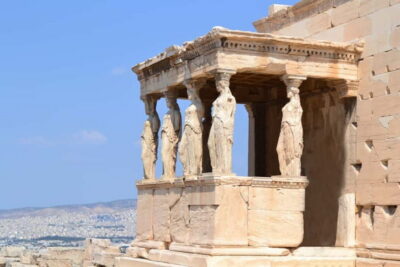

Acropolis monuments & Parthenon Walking Tour with Optional Acropolis Museum
Read our review →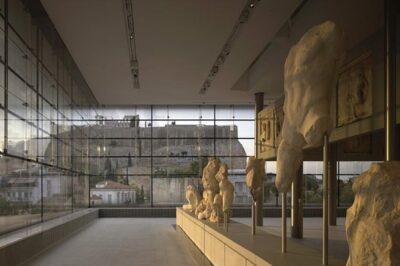
Athens All Included: Acropolis and Museum Guided Tour with Ticket
Read our review →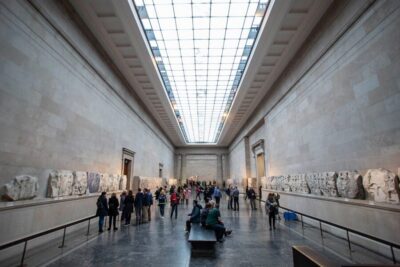
Acropolis Museum Ticket with optional Audio Guide
Read our review →
Acropolis Ticket & Optional Self-Guided Audio Tours
Read our review →Browse the lists this tour appears in